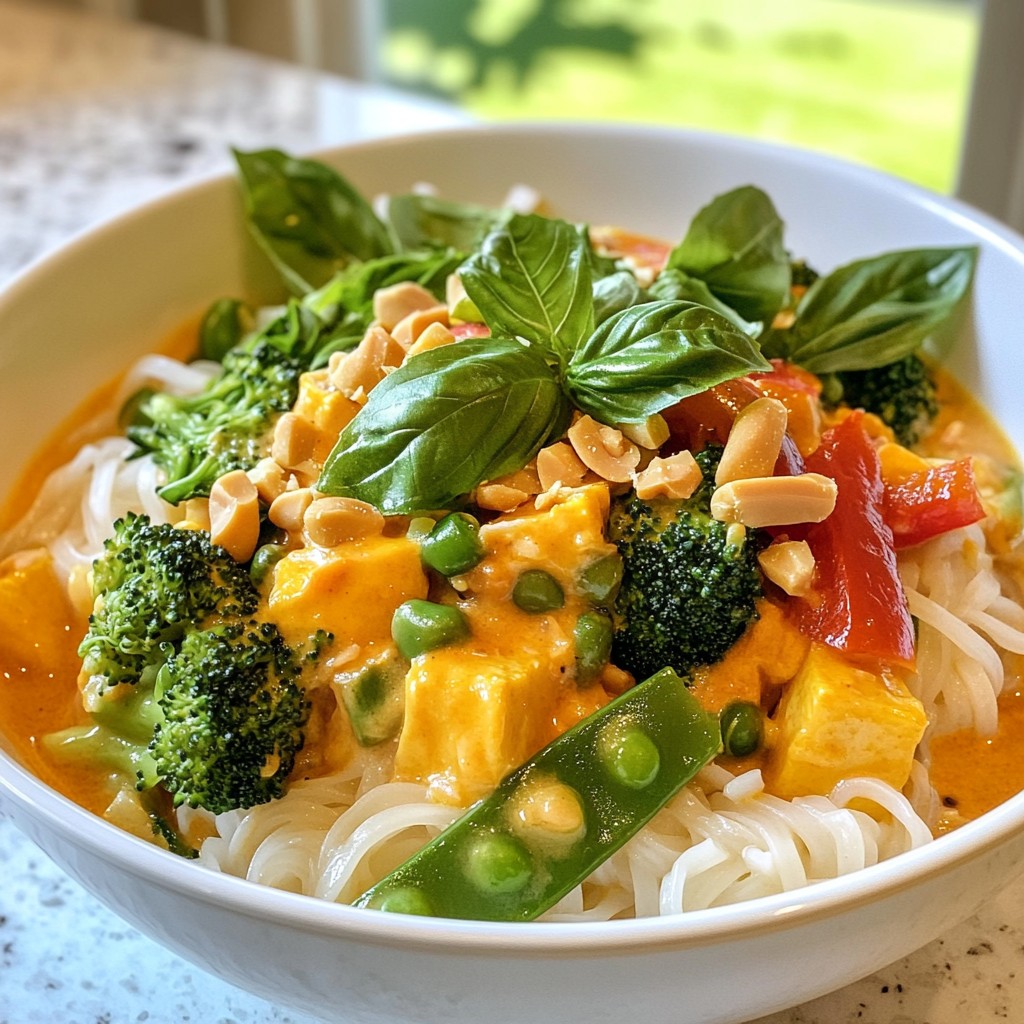
Welcome to a delicious journey with my Thai Red Curry Noodle Bowl recipe! This dish bursts with rich flavors and is packed with vibrant ingredients. Whether you crave a comforting meal or want to impress your friends, I’ve got you covered. We'll explore easy steps, ingredient swaps, and tips to make this bowl a hit. Get ready to savor a taste of Thailand right in your kitchen! Let's dive in!
Why I Love This Recipe
- Delicious Flavor: This Thai Red Curry Noodle Bowl is packed with rich, aromatic flavors that tantalize the taste buds.
- Quick to Prepare: In just 30 minutes, you can whip up a satisfying meal that's perfect for busy weeknights.
- Customizable Ingredients: You can easily swap in your favorite vegetables or proteins, making it versatile for any dietary preference.
- Healthy and Nutritious: This dish is loaded with veggies and coconut milk, providing a nutritious balance of flavors and health benefits.
Ingredients
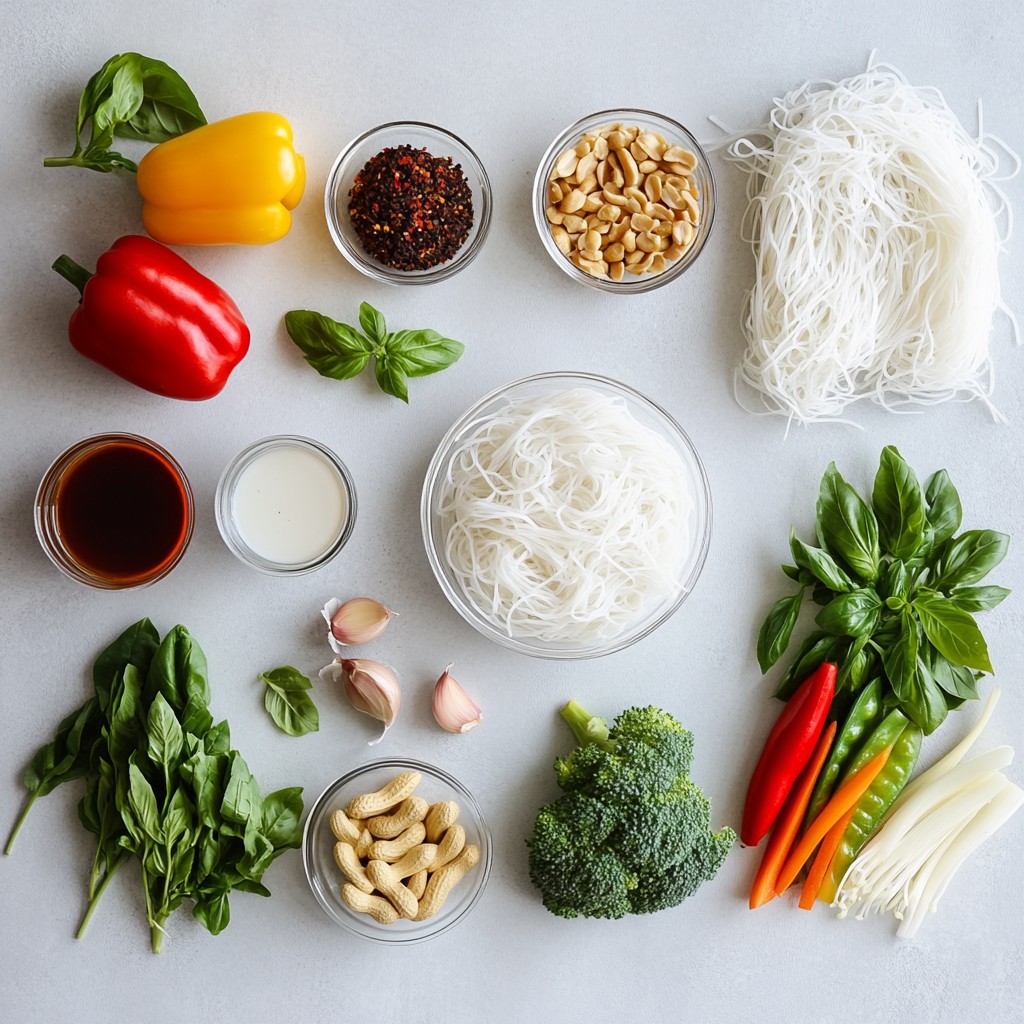
List of Ingredients
- 200g rice noodles
- 1 tablespoon coconut oil
- 1 small onion, sliced
- 2 cloves garlic, minced
- 1 inch ginger, grated
- 2 tablespoons red curry paste
- 400ml coconut milk
- 1 cup vegetable broth
- 1 bell pepper, sliced (red or yellow)
- 1 cup broccoli florets
- 1 cup snap peas
- 2 tablespoons soy sauce
- 1 tablespoon lime juice
- Fresh basil leaves for garnish
- Chopped peanuts for topping (optional)
Measurement Guide
When cooking, measuring accurately helps a lot. Here’s how to measure these ingredients:
- Rice noodles: Use a kitchen scale for 200 grams.
- Coconut oil: A tablespoon is about 15 ml.
- Onion: One small onion usually weighs about 70 grams.
- Garlic: Use a standard garlic clove, about 3 grams each.
- Ginger: One inch of ginger is roughly 2.5 cm.
- Red curry paste: A standard tablespoon holds about 15 grams.
- Coconut milk: One can is usually 400 ml.
- Vegetable broth: Use a measuring cup for 1 cup, or 240 ml.
- Bell pepper: One medium bell pepper weighs about 150 grams.
- Broccoli florets: One cup is around 90 grams.
- Snap peas: One cup is about 100 grams.
- Soy sauce: One tablespoon is 15 ml.
- Lime juice: Use fresh lime juice for best taste.
- Fresh basil: Use a handful for garnish.
- Chopped peanuts: Use as much as you like for topping.
Ingredient Substitutions
You can swap some ingredients to fit your taste or needs:
- Rice noodles: Substitute with udon noodles or even whole wheat spaghetti.
- Coconut oil: Any neutral oil, like canola or sunflower oil, works too.
- Onion: Shallots or leeks can replace the onion for a different flavor.
- Garlic: If you don’t have fresh garlic, garlic powder works in a pinch.
- Ginger: Ground ginger is an okay substitute, though fresh is best.
- Red curry paste: Yellow curry paste can be milder and work well.
- Coconut milk: Use almond milk for a lower-fat option, but it changes the flavor.
- Vegetable broth: Water can replace broth, but add more spices for taste.
- Bell pepper: Any color or even zucchini can add a nice crunch.
- Broccoli: Cauliflower or spinach make great swaps.
- Snap peas: Green beans or asparagus can add a nice crunch too.
- Soy sauce: Use tamari for a gluten-free option.
- Lime juice: Lemon juice works well in a pinch.
- Basil: Cilantro can add a fresh twist instead.
- Peanuts: Almonds or cashews can add a nice crunch too.
Step-by-Step Instructions
Cooking Rice Noodles
Start by boiling water in a pot. Add the rice noodles and cook them as the package says. This usually takes about 4-6 minutes. Once they are soft, drain them in a colander. Rinse them with cold water. This step helps stop the cooking process. Set the noodles aside for now.
Preparing the Curry Base
Grab a large pot or deep skillet and heat the coconut oil over medium heat. Add the sliced onion and sauté for about 3-4 minutes. The onion should become soft and clear. Next, stir in the minced garlic and grated ginger. Cook for one more minute. This brings out great flavors. Now add the red curry paste and mix it well. Let it cook for about 2 minutes. This helps deepen the flavor. Slowly pour in the coconut milk and vegetable broth. Stir until everything is mixed well. Bring the mixture to a gentle simmer.
Adding Vegetables and Final Touches
Now, add the sliced bell pepper, broccoli florets, and snap peas into the pot. Cook for 5-7 minutes. You want the veggies to stay bright and crisp. After that, stir in the soy sauce and lime juice. Taste it and adjust if needed. To serve, take your rice noodles and place them in bowls. Ladle the hot curry sauce over the noodles. Finish by garnishing with fresh basil leaves and chopped peanuts if you like. Enjoy your meal!
Tips & Tricks
Perfecting the Noodle Texture
To get the best noodle texture, cook the rice noodles just right. Follow the package instructions carefully. Overcooking makes them mushy. Under-cooking leaves them too firm. After cooking, rinse them in cold water. This stops the cooking process. It keeps them from sticking together. You want them soft, but not too soft. They should hold their shape in the bowl.
Enhancing Flavor Profiles
Enhancing the flavors in your Thai Red Curry Noodle Bowl is fun. Start with fresh ingredients. Fresh garlic and ginger pack a punch. Use good quality red curry paste. It gives your dish that rich, authentic taste. Adjust the soy sauce to fit your taste. A splash of lime juice adds brightness. If you like heat, try adding a pinch of chili flakes. This will make it spicy and exciting!
Presentation Tips for Serving
Presentation makes your meal more inviting. Use deep bowls to show off the noodles and sauce. Arrange the veggies neatly on top. Sprinkle chopped peanuts for crunch. Fresh basil leaves add a nice touch of color. You could also add lime wedges on the side. This invites your guests to squeeze fresh lime juice over their serving. A vibrant meal looks good and tastes great!
Pro Tips
- Use Fresh Ingredients: Fresh vegetables and herbs enhance the flavor and nutritional value of your dish. Always choose the freshest produce available.
- Adjust Spice Levels: If you prefer a milder curry, start with less red curry paste and gradually increase according to your taste. You can always add more, but it’s hard to take it away!
- Perfect Noodles: Make sure to rinse the cooked rice noodles under cold water after draining to stop the cooking process and prevent them from sticking together.
- Garnish for Flavor: Don’t skip the fresh basil and chopped peanuts. They add an extra layer of flavor and texture that makes the dish truly special.
Variations
Protein Additions (Chicken, Tofu, Shrimp)
You can add protein to your Thai Red Curry Noodle Bowl to make it heartier. Choose chicken, tofu, or shrimp based on your taste.
- Chicken: Use boneless chicken thighs or breasts. Cut them into bite-sized pieces. Sauté with the onion before adding garlic and ginger. Cook until golden.
- Tofu: Use firm tofu for a great texture. Press it to remove excess water. Cut it into cubes and sauté until crispy. Add it with the veggies for a nice flavor.
- Shrimp: Peel and devein shrimp before cooking. Toss them in during the last minutes of cooking. They cook quickly and add a lovely taste.
Spice Level Adjustments
You can change the spice level to fit your taste. If you love heat, use more red curry paste. Start with one tablespoon and add more a little at a time.
- Mild: If you prefer mild flavors, use less red curry paste. You can also add more coconut milk for creaminess.
- Hotter: For extra heat, mix in fresh chili peppers or chili flakes. Add these early in the cooking for better flavor infusion.
Vegetable Alternatives
Feel free to swap in your favorite veggies. This dish is very flexible. Here are some great options:
- Carrots: Slice thinly and add for sweetness. They cook well with other veggies.
- Zucchini: Cut into half-moons. They add a tender crunch when cooked.
- Spinach or Kale: Stir in these greens at the end. They wilt quickly and add nutrients.
- Mushrooms: Add sliced mushrooms for an earthy flavor. They pair well with the curry.
Experimenting with these variations makes your Thai Red Curry Noodle Bowl unique every time!
Storage Info
Storing Leftovers
After enjoying your Thai Red Curry Noodle Bowl, store any leftovers in an airtight container. Let the dish cool to room temperature before sealing it. This helps keep the flavors fresh. You can store it in the fridge for up to three days. Make sure to label the container with the date so you remember when you made it.
Reheating Guidelines
When you're ready to eat the leftovers, you can reheat them easily. Place the curry and noodles in a pot over medium heat. Stir gently until heated through. If it seems thick, add a splash of vegetable broth or water. This will help bring back the creamy texture. Alternatively, you can microwave it in a safe dish. Heat in short bursts, stirring in between, until hot.
Freezing Instructions
If you want to save some for later, freezing works well. First, let the dish cool completely. Then, portion it into freezer-safe containers. Leave some space at the top, as the curry may expand when frozen. You can freeze it for up to three months. When you're ready to eat, thaw it overnight in the fridge. Reheat as mentioned above, and enjoy your delicious meal!
FAQs
Can I make this dish ahead of time?
Yes, you can make this dish ahead of time. Cook the noodles and store them separately from the sauce. Keep the sauce in the fridge for up to three days. When you are ready to enjoy it, simply reheat the sauce and mix it with the noodles.
How can I make it vegan?
To make this dish vegan, choose a plant-based red curry paste. Ensure the vegetable broth is vegan, too. The coconut milk is already vegan. Replace any animal-based toppings with nuts or seeds for added crunch.
What can I serve with Thai Red Curry Noodle Bowl?
You can serve this dish with fresh spring rolls or a simple salad. A side of steamed rice is also great. For extra crunch, add fried tofu or crispy shallots on top.
This blog post shared how to make a tasty Thai Red Curry Noodle Bowl. We covered the key ingredients, including measurements and substitutions. You learned step-by-step instructions on cooking rice noodles, preparing the curry base, and adding vegetables.
I also shared tips to perfect noodle texture and enhance flavors. With variations for proteins and spice levels, you can customize your dish. Finally, we discussed storage info and common questions. Now, you’re ready to create a delicious meal that impresses! Enjoy your cooking adventure!