
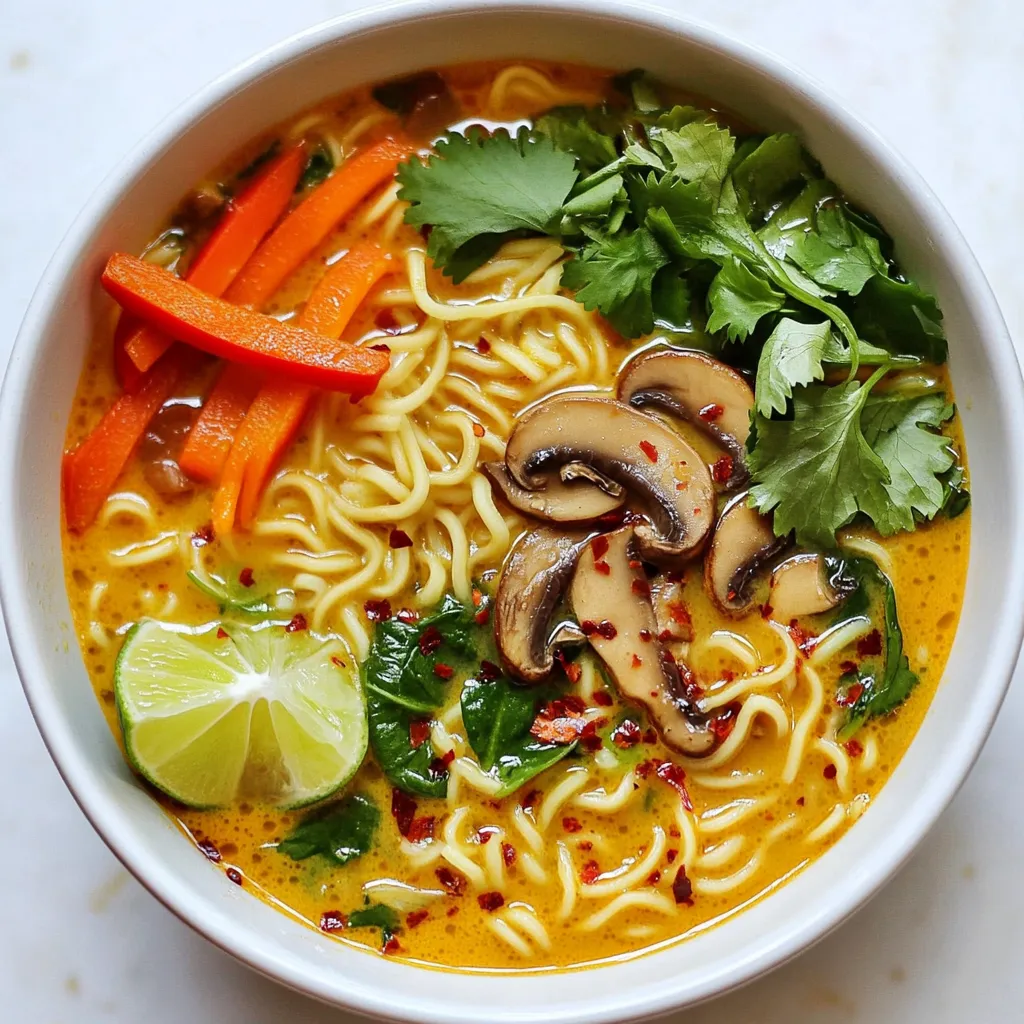
Thai Coconut Curry Ramen Flavorful and Healthy Dish

WANT TO SAVE THIS RECIPE?

Looking for a dish that combines rich flavors with healthy ingredients? Thai Coconut Curry Ramen fits the bill! This delightful meal features creamy coconut milk, spicy red curry paste, and fresh veggies that create an explosion of taste in every bite. Join me as we explore how to make this quick and easy ramen at home. Whether you’re new to cooking or a seasoned chef, this recipe is for you!

Why I Love This Recipe

  1. Quick and Easy: This recipe takes only 25 minutes from start to finish, making it perfect for a weeknight dinner.
  2. Flavorful and Satisfying: The combination of coconut milk and red curry paste creates a rich, satisfying broth that elevates the ramen experience.
  3. Customizable: You can easily swap out vegetables or proteins to suit your taste or dietary preferences.
  4. Healthy Ingredients: Packed with vegetables like spinach, carrots, and bell peppers, this dish is both nutritious and delicious.

Ingredients

Main Ingredients

– 200g ramen noodles

– 1 can (400ml) coconut milk

– 2 tablespoons red curry paste

– 2 cups vegetable broth

Additional Ingredients

– 1 tablespoon soy sauce

– 1 tablespoon lime juice

– 1 cup mushrooms, sliced (shiitake or button)

– 1 cup baby spinach

– 1/2 cup carrots, julienned

– 1/2 cup bell peppers, sliced (red or yellow)

– 2 tablespoons fish sauce (optional for depth)

– Fresh cilantro for garnish

– Lime wedges for serving

– Chili flakes, to taste

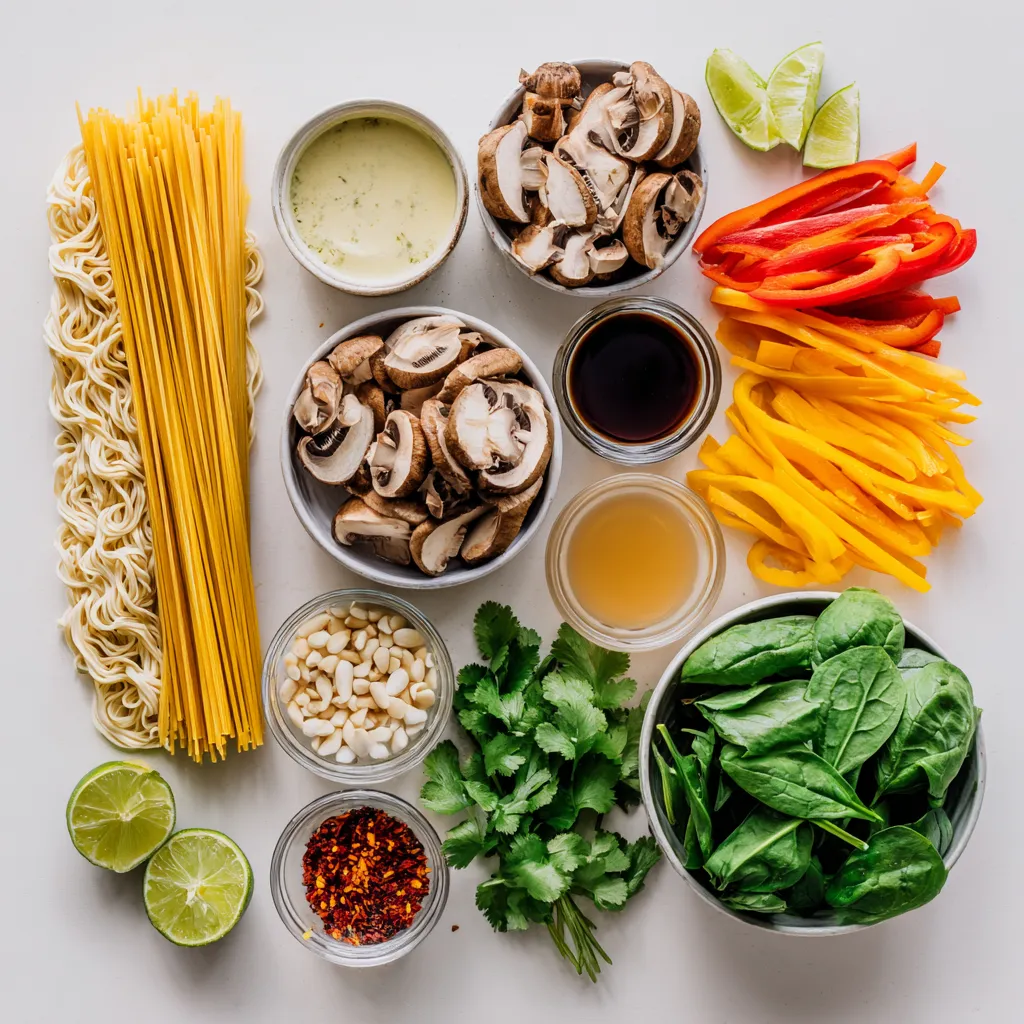
To make this dish, gather your main ingredients first. Ramen noodles serve as the base. Coconut milk adds creaminess. Red curry paste brings heat and flavor. Vegetable broth gives depth to the soup.

Next, gather additional ingredients to enhance your ramen. Soy sauce adds umami. Lime juice brings brightness. Mushrooms, spinach, carrots, and bell peppers add nutrition and color. If you want more flavor, use fish sauce. Finally, cilantro and lime wedges make great garnishes. Chili flakes can spice things up.

This combo of ingredients makes a delicious, healthy meal. It’s easy to customize based on your taste. Enjoy creating your own Thai coconut curry ramen!
Step-by-Step Instructions

Preparing the Broth

First, grab a large saucepan. Over medium heat, combine one can of coconut milk with two tablespoons of red curry paste. Stir this mix well. You want the paste to dissolve and become fragrant. Next, pour in two cups of vegetable broth. Bring this mixture to a gentle simmer. Add a tablespoon of soy sauce and a tablespoon of lime juice. These add depth and brightness to your broth.

Cooking the Vegetables

Now, it’s time to add some fresh veggies. Slice one cup of mushrooms and julienne half a cup of carrots. Slice half a cup of bell peppers. Add these to your broth. Let them cook for about five minutes. You want them to soften but still have some bite. After that, add one cup of baby spinach. Let it wilt for about two to three minutes. If you like, add a bit of fish sauce here for extra flavor. Adjust with chili flakes if you want some heat.

Cooking the Ramen Noodles

While your veggies cook, prepare the ramen noodles. Boil 200 grams of ramen noodles according to the package instructions. Once they are cooked, drain them and set them aside. To serve, place a portion of noodles in a bowl. Ladle the curry broth and vegetables over the noodles. Finish with fresh cilantro and a wedge of lime. Enjoy your delicious Thai Coconut Curry Ramen!

Tips & Tricks

Perfecting the Flavor

To get the best taste, adjust spice levels to fit your taste. If you love heat, add more chili flakes. For a milder dish, use less red curry paste. Start with a small amount, then add more until it feels right.

Enhancing depth with fish sauce can lift the flavor. It adds a savory umami that makes your ramen shine. If you want a rich taste, use it, but it’s fine to skip if you prefer a lighter dish.

Cooking Tips

When cooking noodles, follow the package instructions carefully. Undercook them slightly for that perfect texture. They will finish cooking when you add them to the hot broth. This keeps them from becoming too soft.

For freshness, feel free to swap in different vegetables. Try bok choy or snap peas instead of bell peppers. Getting creative here can make your dish more colorful and tasty.

Presentation Tips

Garnishing is key for visual appeal. Sprinkle fresh cilantro over the top for a pop of green. Lime wedges add a bright touch too. You can even add a sprinkle of chili flakes for a bit of color.

For serving, use a wide bowl to showcase your ramen. Layer the noodles first, then pour the broth with veggies. This way, you create a beautiful and inviting dish that looks just as good as it tastes.

Pro Tips

  1. Choose the Right Noodles: Opt for fresh ramen noodles if available; they will give your curry a more authentic texture and flavor compared to dried noodles.
  2. Customize Your Veggies: Feel free to add or substitute your favorite vegetables like zucchini or broccoli to make the dish your own.
  3. Adjust Spice Level: Control the heat by varying the amount of chili flakes added; start with a little and increase based on your preference.
  4. Garnish for Flavor: Don’t skip the fresh cilantro and lime wedges; they add a burst of freshness that elevates the dish.

Variations

Protein Additions

You can add protein to your Thai coconut curry ramen to make it heartier.

Chicken: Cook thin slices of chicken in the broth. This adds flavor and protein. Use cooked chicken for a faster meal. Simply add it to the broth to heat through.

Tofu: For a plant-based option, use tofu. Firm tofu works best. Cut it into cubes and fry it until golden. Add it to the ramen for a nice texture.

Vegan Options

If you want a vegan dish, focus on plant-based ingredients.

– Use completely plant-based ingredients like vegetable broth, coconut milk, and fresh veggies. This keeps the dish rich and tasty.

– For broth, use vegetable broth or a homemade blend. You can mix water with miso paste for a great flavor.

Spice Level Adjustments

Adjust the spice level to fit your taste.

– You can make mild, medium, or spicy versions. Add less curry paste for mild. Increase it for spice.

– Try different curry pastes for unique flavors. Green curry paste gives a different taste than red. Experiment to find your favorite!

Storage Info

Storing Leftovers

To store your Thai coconut curry ramen, let it cool down. Place it in an airtight container. This will keep it fresh. You can store it in the fridge for up to three days. After that, the flavors may fade, and it might not taste as good.

Reheating Instructions

You can reheat the ramen in two ways: the microwave or stovetop. For the microwave, place it in a bowl and cover it to avoid splatters. Heat it for one or two minutes. Stir halfway through to warm it evenly.

Using the stovetop is another great option. Pour the ramen into a pot over low heat. Stir often until it warms up. This method helps keep the texture and flavor intact.

Freezing Tips

You can freeze the curry broth and noodles separately. For the broth, cool it down, then pour it into a freezer-safe bag. Make sure to remove excess air. For the noodles, cook them just until al dente, then freeze them in a separate bag.

When you want to enjoy your frozen ramen, thaw the broth in the fridge overnight. For the noodles, you can soak them in warm water. After thawing, reheat both together in a pot. This keeps the dish tasty and enjoyable.

FAQs

What is Thai Coconut Curry Ramen?

Thai Coconut Curry Ramen is a rich noodle soup. It blends creamy coconut milk with spicy red curry. The dish has layers of flavor from the broth and fresh veggies. You will taste the sweetness of coconut and the heat of curry. The mushrooms, carrots, and bell peppers add crunch and color. Baby spinach gives it a fresh touch. This ramen is a delightful mix of textures and tastes.

Can I make this recipe gluten-free?

Yes, you can make this recipe gluten-free. Start with gluten-free ramen noodles. You can find them in most stores. Use tamari instead of soy sauce. Tamari has a similar flavor but is gluten-free. Make sure to check the fish sauce label if you use it, as some brands may contain gluten. These swaps will keep your dish tasty and safe.

How can I adjust the recipe for more servings?

To make more servings, simply scale the ingredients. Double or triple the amounts as needed. For instance, use 400g of ramen noodles for four servings. Adjust the coconut milk and broth to match. When cooking, use a larger pot to hold everything. Keep an eye on cooking times, as larger batches may take a bit longer. Enjoy sharing this delicious dish with friends or family!

This recipe for Thai Coconut Curry Ramen blends simple ingredients into a tasty meal. We covered the main and additional ingredients, along with step-by-step cooking instructions. I shared tips for flavor and presentation. You can also explore variations to suit different diets. Lastly, proper storage and reheating tips ensure your dish stays fresh. Enjoy making this dish, and feel free to experiment with your own flavor

- 200g ramen noodles - 1 can (400ml) coconut milk - 2 tablespoons red curry paste - 2 cups vegetable broth - 1 tablespoon soy sauce - 1 tablespoon lime juice - 1 cup mushrooms, sliced (shiitake or button) - 1 cup baby spinach - 1/2 cup carrots, julienned - 1/2 cup bell peppers, sliced (red or yellow) - 2 tablespoons fish sauce (optional for depth) - Fresh cilantro for garnish - Lime wedges for serving - Chili flakes, to taste To make this dish, gather your main ingredients first. Ramen noodles serve as the base. Coconut milk adds creaminess. Red curry paste brings heat and flavor. Vegetable broth gives depth to the soup. Next, gather additional ingredients to enhance your ramen. Soy sauce adds umami. Lime juice brings brightness. Mushrooms, spinach, carrots, and bell peppers add nutrition and color. If you want more flavor, use fish sauce. Finally, cilantro and lime wedges make great garnishes. Chili flakes can spice things up. This combo of ingredients makes a delicious, healthy meal. It's easy to customize based on your taste. Enjoy creating your own Thai coconut curry ramen! {{ingredient_image_1}} First, grab a large saucepan. Over medium heat, combine one can of coconut milk with two tablespoons of red curry paste. Stir this mix well. You want the paste to dissolve and become fragrant. Next, pour in two cups of vegetable broth. Bring this mixture to a gentle simmer. Add a tablespoon of soy sauce and a tablespoon of lime juice. These add depth and brightness to your broth. Now, it’s time to add some fresh veggies. Slice one cup of mushrooms and julienne half a cup of carrots. Slice half a cup of bell peppers. Add these to your broth. Let them cook for about five minutes. You want them to soften but still have some bite. After that, add one cup of baby spinach. Let it wilt for about two to three minutes. If you like, add a bit of fish sauce here for extra flavor. Adjust with chili flakes if you want some heat. While your veggies cook, prepare the ramen noodles. Boil 200 grams of ramen noodles according to the package instructions. Once they are cooked, drain them and set them aside. To serve, place a portion of noodles in a bowl. Ladle the curry broth and vegetables over the noodles. Finish with fresh cilantro and a wedge of lime. Enjoy your delicious Thai Coconut Curry Ramen! To get the best taste, adjust spice levels to fit your taste. If you love heat, add more chili flakes. For a milder dish, use less red curry paste. Start with a small amount, then add more until it feels right. Enhancing depth with fish sauce can lift the flavor. It adds a savory umami that makes your ramen shine. If you want a rich taste, use it, but it’s fine to skip if you prefer a lighter dish. When cooking noodles, follow the package instructions carefully. Undercook them slightly for that perfect texture. They will finish cooking when you add them to the hot broth. This keeps them from becoming too soft. For freshness, feel free to swap in different vegetables. Try bok choy or snap peas instead of bell peppers. Getting creative here can make your dish more colorful and tasty. Garnishing is key for visual appeal. Sprinkle fresh cilantro over the top for a pop of green. Lime wedges add a bright touch too. You can even add a sprinkle of chili flakes for a bit of color. For serving, use a wide bowl to showcase your ramen. Layer the noodles first, then pour the broth with veggies. This way, you create a beautiful and inviting dish that looks just as good as it tastes. Pro Tips Choose the Right Noodles: Opt for fresh ramen noodles if available; they will give your curry a more authentic texture and flavor compared to dried noodles. Customize Your Veggies: Feel free to add or substitute your favorite vegetables like zucchini or broccoli to make the dish your own. Adjust Spice Level: Control the heat by varying the amount of chili flakes added; start with a little and increase based on your preference. Garnish for Flavor: Don’t skip the fresh cilantro and lime wedges; they add a burst of freshness that elevates the dish. {{image_2}} You can add protein to your Thai coconut curry ramen to make it heartier. - Chicken: Cook thin slices of chicken in the broth. This adds flavor and protein. Use cooked chicken for a faster meal. Simply add it to the broth to heat through. - Tofu: For a plant-based option, use tofu. Firm tofu works best. Cut it into cubes and fry it until golden. Add it to the ramen for a nice texture. If you want a vegan dish, focus on plant-based ingredients. - Use completely plant-based ingredients like vegetable broth, coconut milk, and fresh veggies. This keeps the dish rich and tasty. - For broth, use vegetable broth or a homemade blend. You can mix water with miso paste for a great flavor. Adjust the spice level to fit your taste. - You can make mild, medium, or spicy versions. Add less curry paste for mild. Increase it for spice. - Try different curry pastes for unique flavors. Green curry paste gives a different taste than red. Experiment to find your favorite! To store your Thai coconut curry ramen, let it cool down. Place it in an airtight container. This will keep it fresh. You can store it in the fridge for up to three days. After that, the flavors may fade, and it might not taste as good. You can reheat the ramen in two ways: the microwave or stovetop. For the microwave, place it in a bowl and cover it to avoid splatters. Heat it for one or two minutes. Stir halfway through to warm it evenly. Using the stovetop is another great option. Pour the ramen into a pot over low heat. Stir often until it warms up. This method helps keep the texture and flavor intact. You can freeze the curry broth and noodles separately. For the broth, cool it down, then pour it into a freezer-safe bag. Make sure to remove excess air. For the noodles, cook them just until al dente, then freeze them in a separate bag. When you want to enjoy your frozen ramen, thaw the broth in the fridge overnight. For the noodles, you can soak them in warm water. After thawing, reheat both together in a pot. This keeps the dish tasty and enjoyable. Thai Coconut Curry Ramen is a rich noodle soup. It blends creamy coconut milk with spicy red curry. The dish has layers of flavor from the broth and fresh veggies. You will taste the sweetness of coconut and the heat of curry. The mushrooms, carrots, and bell peppers add crunch and color. Baby spinach gives it a fresh touch. This ramen is a delightful mix of textures and tastes. Yes, you can make this recipe gluten-free. Start with gluten-free ramen noodles. You can find them in most stores. Use tamari instead of soy sauce. Tamari has a similar flavor but is gluten-free. Make sure to check the fish sauce label if you use it, as some brands may contain gluten. These swaps will keep your dish tasty and safe. To make more servings, simply scale the ingredients. Double or triple the amounts as needed. For instance, use 400g of ramen noodles for four servings. Adjust the coconut milk and broth to match. When cooking, use a larger pot to hold everything. Keep an eye on cooking times, as larger batches may take a bit longer. Enjoy sharing this delicious dish with friends or family! This recipe for Thai Coconut Curry Ramen blends simple ingredients into a tasty meal. We covered the main and additional ingredients, along with step-by-step cooking instructions. I shared tips for flavor and presentation. You can also explore variations to suit different diets. Lastly, proper storage and reheating tips ensure your dish stays fresh. Enjoy making this dish, and feel free to experiment with your own flavors!

Thai Coconut Curry Ramen

A flavorful and creamy ramen dish infused with coconut milk and red curry paste, packed with vegetables.
Prep Time 10 minutes
Cook Time 15 minutes
Total Time 25 minutes
Course Main Course
Cuisine Thai
Servings 2
Calories 450 kcal

Ingredients
  

  • 200 g ramen noodles
  • 400 ml coconut milk
  • 2 tablespoons red curry paste
  • 2 cups vegetable broth
  • 1 tablespoon soy sauce
  • 1 tablespoon lime juice
  • 1 cup mushrooms, sliced (shiitake or button)
  • 1 cup baby spinach
  • 0.5 cup carrots, julienned
  • 0.5 cup bell peppers, sliced (red or yellow)
  • 2 tablespoons fish sauce (optional for depth)
  • 1 bunch fresh cilantro for garnish
  • 1 wedge lime for serving
  • to taste chili flakes

Instructions
 

  • In a large saucepan over medium heat, combine the coconut milk and red curry paste. Stir well until the paste is dissolved and fragrant.
  • Pour in the vegetable broth and bring the mixture to a gentle simmer. Stir in the soy sauce and lime juice to enhance the flavor.
  • Add the sliced mushrooms, carrots, and bell peppers, allowing them to cook for about 5 minutes until they soften.
  • Meanwhile, cook the ramen noodles according to package instructions. Drain and set aside.
  • Once the vegetables are cooked, add the baby spinach and let it wilt for about 2-3 minutes. Adjust seasoning by adding fish sauce (if using) and chili flakes to taste.
  • To serve, place a portion of noodles in a bowl, ladle the curry broth with vegetables over the noodles. Garnish with fresh cilantro and a wedge of lime.

Notes

Fish sauce is optional but adds depth to the flavor.
Keyword coconut curry, ramen, vegetarian

WANT TO SAVE THIS RECIPE?

Leave a Comment

Recipe Rating