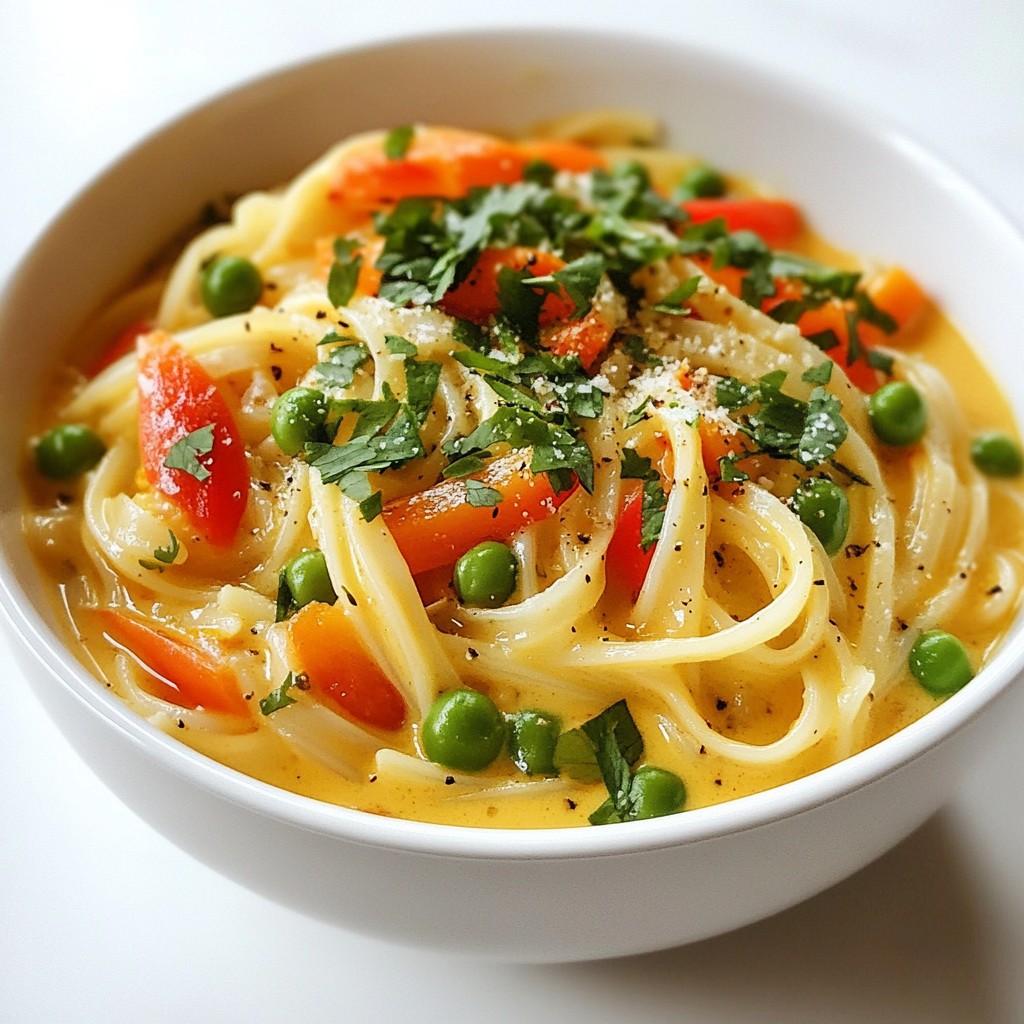
Are you ready to spice up your dinner? Today, I’ll share a simple and tasty recipe for Spicy Thai Coconut Curry Noodles. This dish is packed with flavor and takes just a short time to make. I’ll guide you through each step, share handy tips, and offer great variations. Let’s dive into this flavorful journey that will impress your taste buds and spice up your dinner table!
Why I Love This Recipe
- Flavor Explosion: This dish combines the creamy richness of coconut milk with the aromatic heat of red curry paste, creating a delightful balance of flavors.
- Quick & Easy: Ready in just 30 minutes, this recipe is perfect for busy weeknights when you want a comforting meal without the fuss.
- Colorful Veggies: The vibrant red bell pepper, carrot, and snap peas not only add crunch but also make the dish visually appealing.
- Customizable: You can easily swap in your favorite vegetables or proteins, making this recipe adaptable to your taste preferences.
Ingredients
Complete List of Ingredients
To make Spicy Thai Coconut Curry Noodles, you need the following ingredients:
- 200g rice noodles
- 1 can (400ml) coconut milk
- 2 tablespoons red curry paste
- 1 tablespoon olive oil
- 1 red bell pepper, thinly sliced
- 1 carrot, julienned
- 1 cup snap peas
- 2 green onions, chopped
- 1 tablespoon soy sauce
- 1 tablespoon lime juice
- Fresh cilantro for garnish
- Salt to taste
These ingredients work together to create a creamy, spicy dish that bursts with flavor.
Ingredient Substitutions
If you don’t have an ingredient, you can switch it out:
- Rice noodles can be replaced with egg noodles or whole wheat pasta.
- Coconut milk can be swapped for almond or soy milk, but the flavor changes.
- Red curry paste can be replaced with green curry paste if you like.
- Olive oil can be changed to sesame oil for a nutty taste.
- Fresh cilantro can be replaced with parsley if you prefer.
These swaps keep your dish tasty while using what you have on hand.
Fresh vs. Dried Ingredients
Fresh ingredients make a big difference in flavor. Fresh veggies add crunch and color. Here’s a quick comparison:
- Fresh red bell pepper adds sweetness and crispness.
- Fresh snap peas give a nice snap when you bite them.
- Fresh cilantro has a bright flavor that dried herbs can’t match.
If you must use dried ingredients, remember to adjust the amount. Dried herbs are stronger, so use less. Fresh is best when you want vibrant flavors in your dish.
Step-by-Step Instructions
Cooking the Rice Noodles
First, you need to cook the rice noodles. Follow the package instructions for best results. Usually, this means boiling water and adding the noodles. Cook for about 4-6 minutes until they are soft. Drain the noodles and set them aside. It’s best to keep them separate until later.
Creating the Curry Base
Next, let's make the curry base. Grab a large skillet and heat the olive oil over medium heat. Once hot, add the red curry paste. Sauté it for about 1-2 minutes. This helps release the flavors and aroma. After that, pour in the coconut milk. Stir well to mix with the curry paste. Let this simmer for about 3-5 minutes. This step blends the flavors nicely.
Adding Vegetables and Combining
Now, let’s add the vegetables. Toss in the sliced red bell pepper, julienned carrot, and snap peas. Cook for another 5 minutes. You want the veggies tender but still crisp. After that, it’s time to combine everything. Add the cooked rice noodles to the skillet. Toss gently to coat the noodles in the curry sauce. Drizzle in the soy sauce and lime juice. Mix well and taste. Adjust the salt if you need to. Your dish is almost ready!
Tips & Tricks
How to Enhance the Flavor
To boost the taste of your spicy Thai coconut curry noodles, try these tips:
- Use Fresh Herbs: Fresh cilantro adds bright flavor. Add it at the end for the best taste.
- Add Lime Zest: Lime zest gives a fresh kick. It brightens the whole dish.
- Customize the Heat: If you love spice, add more red curry paste. Start with a little and taste as you go.
- Include Nuts: Toasted peanuts or cashews add great crunch. Sprinkle them on top before serving.
- Finish with Sesame Oil: A drizzle of sesame oil at the end adds depth. It enhances the nutty flavor profile.
Common Mistakes to Avoid
Many people make these common mistakes when cooking this dish:
- Overcooking the Noodles: Follow the package instructions carefully. Undercook slightly for the best texture.
- Not Deglazing the Pan: After sautéing the paste, add coconut milk slowly. This prevents burning bits from sticking.
- Skipping Salt: Season well at the end. Tasting helps you find the right balance.
- Ignoring Vegetable Cook Time: Don’t let the veggies get mushy. They should stay bright and crisp.
- Using Cold Ingredients: Room temperature ingredients mix better. This helps the flavors combine nicely.
Serving Suggestions for Presentation
To make your spicy Thai coconut curry noodles look stunning, follow these ideas:
- Use a Bowl: Serve in a deep bowl for a cozy feel. It also keeps the noodles warm longer.
- Garnish Well: Top with fresh cilantro and chopped green onions. This adds color and freshness.
- Add Lime Wedges: Serve with lime wedges on the side. This lets guests add extra zing as they like.
- Layer the Noodles: Place the noodles at the bottom, then add the veggies on top. This creates a beautiful look.
- Serve with Chopsticks: Use chopsticks for a fun experience. It fits the theme of the dish well.
These tips will help your dish shine and impress everyone at the table. Enjoy your cooking!
Pro Tips
- Use Fresh Ingredients: Fresh vegetables not only enhance the flavor but also add more nutrients to your dish.
- Adjust Spice Level: Modify the amount of red curry paste based on your heat preference; start with less and add more as needed.
- Perfectly Cooked Noodles: Ensure the rice noodles are cooked al dente to maintain a pleasant texture when combined with the sauce.
- Garnish Wisely: Fresh cilantro and green onions not only add color but also a burst of freshness that elevates the overall taste.
Variations
Vegetarian and Vegan Options
You can easily make this dish vegetarian or vegan. Simply skip the fish sauce and use soy sauce instead. You can also replace the coconut milk with plant-based milk, like almond or soy. This way, you keep the creamy texture and flavor. Add more veggies, like mushrooms or zucchini, for extra taste and nutrition.
Protein Add-ins (e.g., shrimp, chicken, tofu)
For protein, shrimp, chicken, or tofu works well. If you choose shrimp, add it when you cook the curry base. It cooks quickly and absorbs the flavors. For chicken, cook it first, then add it back with the noodles. Tofu is a great choice too. Use firm tofu, and pan-fry it until golden. Then, mix it into the dish for added texture.
Spice Level Adjustments
You can adjust the spice level based on your taste. If you love heat, add more red curry paste. For less spice, use a smaller amount or add coconut milk to cool it down. Fresh chilies or chili flakes can also spice it up. Always taste as you go, so you get the right balance for your palate.
Storage Info
How to Properly Store Leftovers
To keep your spicy Thai coconut curry noodles fresh, let them cool first. Use an airtight container. Store them in the fridge for up to three days. This way, you keep the flavors intact and prevent spoilage.
Reheating Tips
When you are ready to eat, gently reheat the noodles. You can use a skillet or microwave. If using a skillet, add a splash of water or coconut milk. Heat over low until warm. For the microwave, cover the bowl and heat in short bursts. Stir in between to avoid hot spots.
Freezing Instructions
If you want to save some for later, freezing works well. Place the cooled noodles in a freezer-safe bag. Remove as much air as you can to prevent freezer burn. They can stay frozen for up to a month. When you are ready to enjoy, thaw them overnight in the fridge before reheating.
FAQs
Can I use different noodles?
Yes, you can use different noodles. Try using udon, egg noodles, or even whole wheat noodles. Each type brings its own texture and flavor. Just make sure to cook them according to their package instructions.
What if I don’t have red curry paste?
If you don’t have red curry paste, you can make your own. Blend red chili, garlic, ginger, and spices like cumin and coriander. You can also use yellow or green curry paste as a substitute. Just remember, it will change the flavor slightly.
How do I make this dish gluten-free?
To make this dish gluten-free, use gluten-free soy sauce or tamari. Also, ensure your rice noodles are labeled gluten-free. Most rice noodles are safe, but always check the package. Enjoy your meal without worry!
In this blog post, we explored the key ingredients and detailed instructions for a delicious curry dish. We discussed substitutions, fresh versus dried options, and shared tips to enhance your meal. Remember to avoid common mistakes and try the variations for a unique spin. Proper storage ensures your leftovers stay tasty. Finally, we answered common questions about noodle types and alternatives. Enjoy your cooking adventure and make this dish your own!