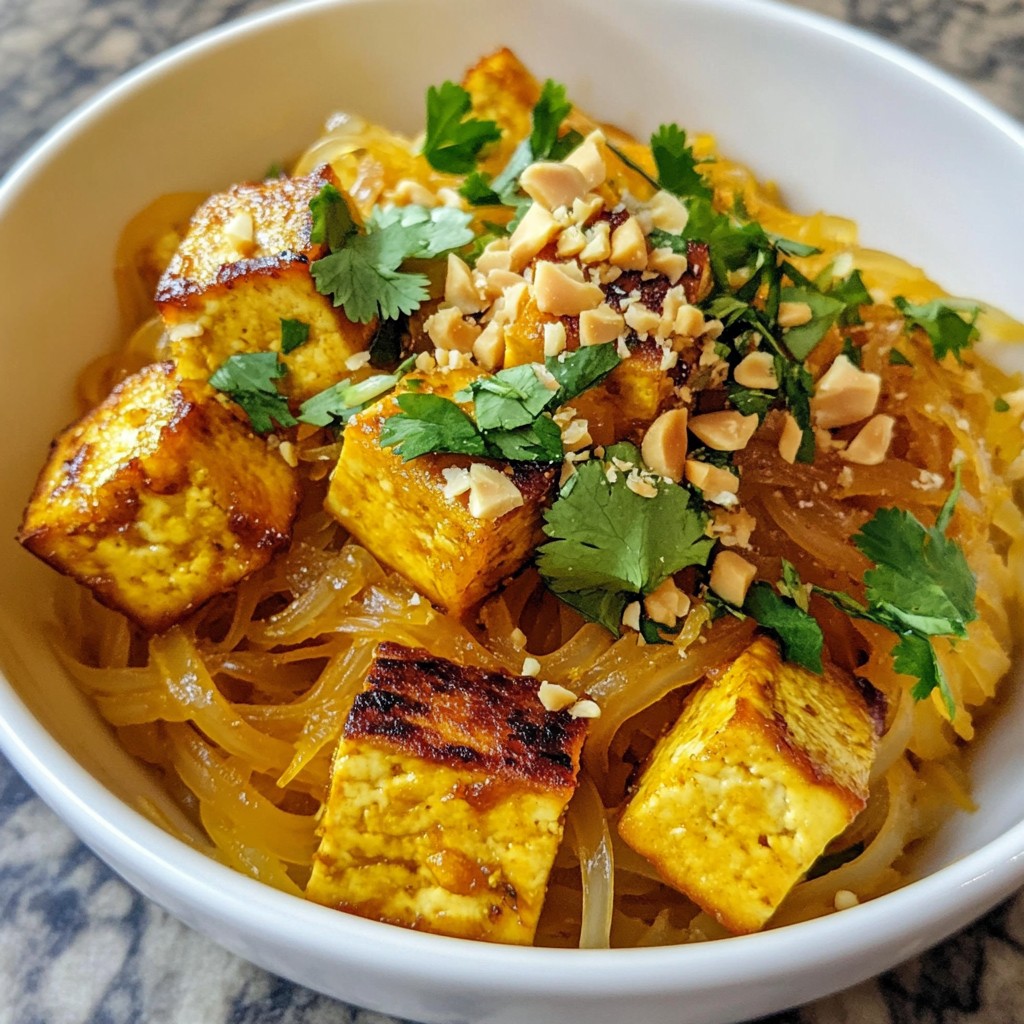
Are you ready to spice up your dinner with a twist on a classic? This Spaghetti Squash Pad Thai is not only flavorful but also easy to make. You’ll love how this dish brings together crunchy veggies, savory tofu, and the perfect balance of sweet and tangy sauce. Whether you're looking for a healthy meal or need a fun recipe, this one checks all the boxes. Let’s dive in and get cooking!
Why I Love This Recipe
- Healthy Alternative: This recipe offers a nutritious twist on traditional Pad Thai, using spaghetti squash instead of noodles.
- Quick and Easy: With a total cooking time of just 50 minutes, this dish is perfect for busy weeknights.
- Flavor Packed: The combination of tamarind, soy sauce, and lime juice creates a deliciously tangy flavor that’s hard to resist.
- Customizable: You can easily modify this recipe by adding your favorite vegetables or proteins for a personalized touch.
Ingredients
List of Key Ingredients
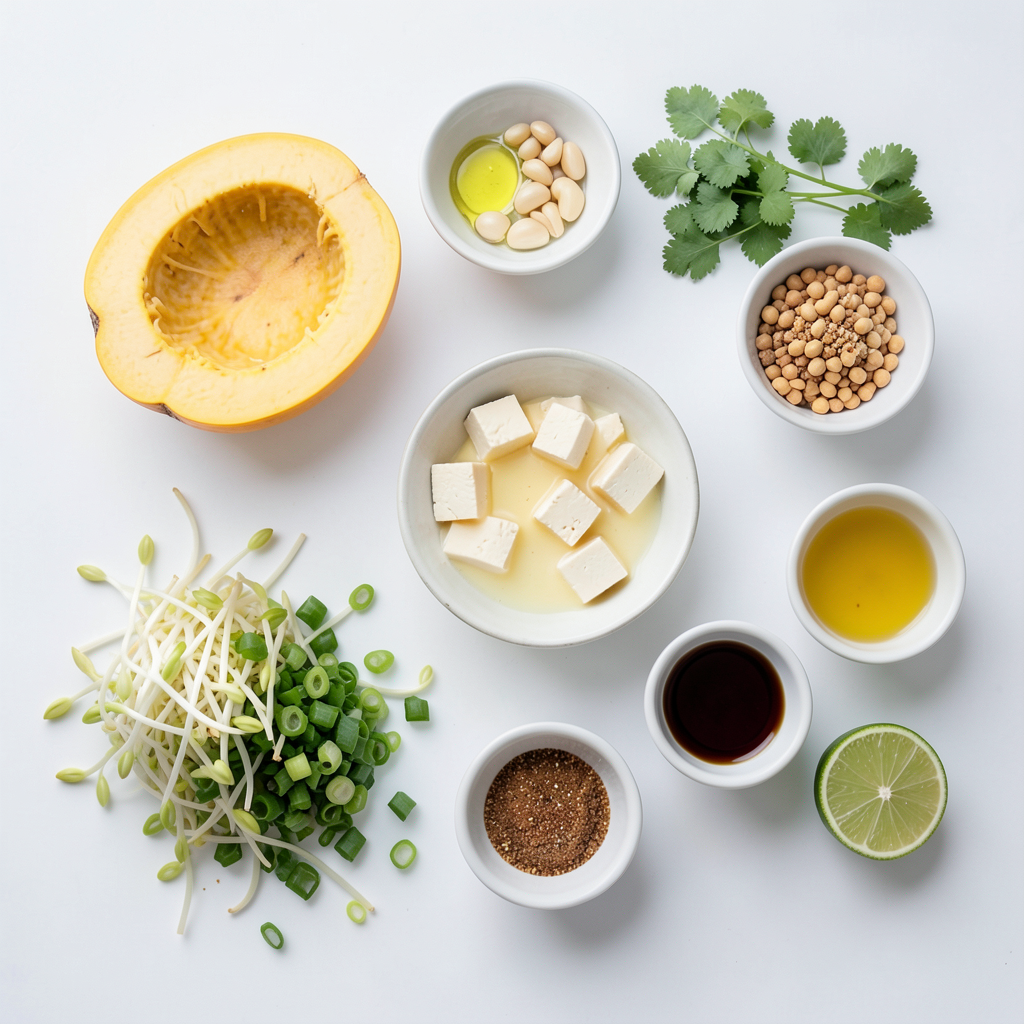
To make a great Spaghetti Squash Pad Thai, you need:
- 1 medium spaghetti squash
- 2 tablespoons coconut oil
- 2 cloves garlic, minced
- 1 cup firm tofu, cubed
- 2 eggs, lightly beaten
- 1 cup bean sprouts
- 2 green onions, chopped
- ¼ cup crushed peanuts
- 3 tablespoons tamarind paste
- 2 tablespoons soy sauce
- 1 tablespoon brown sugar
- 1 tablespoon lime juice
- 1 teaspoon chili flakes (optional)
- Fresh cilantro for garnish
These ingredients come together to create a dish full of flavor and texture. The spaghetti squash serves as a fun and healthy base. The tofu adds protein, while the eggs and vegetables give it a balanced taste.
Substitutions for Dietary Needs
If you have dietary needs, don't worry! You can make this dish work for you:
- Tofu: Use chickpeas or tempeh as a protein source.
- Eggs: Replace with scrambled silken tofu for a vegan option.
- Soy Sauce: Choose tamari for a gluten-free version.
- Coconut Oil: Use olive oil or avocado oil instead.
- Bean Sprouts: Substitute with shredded carrots or zucchini for crunch.
These swaps keep the dish tasty while meeting your needs.
Nutritional Information per Serving
Each serving of Spaghetti Squash Pad Thai offers a nutritious meal. Here’s a quick look:
- Calories: Approximately 300
- Protein: 12 grams
- Carbohydrates: 30 grams
- Fat: 15 grams
- Fiber: 5 grams
This dish is not just delicious; it also provides a good balance of nutrients. It's a great option for a light yet filling meal.
Step-by-Step Instructions
Prepping the Spaghetti Squash
To start, preheat your oven to 400°F (200°C). Next, take your spaghetti squash and cut it in half lengthwise. Use a spoon to scoop out all the seeds. This step helps the squash cook evenly. Place the squash halves cut side down on a baking sheet lined with parchment paper. Bake them for 30 to 40 minutes. You know it’s done when the strands pull apart easily with a fork.
Cooking the Tofu and Eggs
While the squash bakes, heat 2 tablespoons of coconut oil in a large skillet over medium heat. Add 2 cloves of minced garlic and sauté for about one minute. This will add a nice aroma to your dish. Now, add 1 cup of cubed firm tofu to the skillet. Cook the tofu for 5 to 7 minutes, stirring until it turns golden brown on all sides. Once the tofu is ready, push it to one side of the skillet. Pour 2 lightly beaten eggs onto the other side. Scramble the eggs until they are fully cooked, then mix them with the tofu.
Combining Ingredients and Final Steps
Now it’s time to bring it all together. Stir in 1 cup of bean sprouts and 2 chopped green onions. Then, add the cooked spaghetti squash strands to the skillet and toss everything together. In a small bowl, whisk together 3 tablespoons of tamarind paste, 2 tablespoons of soy sauce, 1 tablespoon of brown sugar, 1 tablespoon of lime juice, and optional chili flakes. Pour this sauce over the mixture in the skillet. Toss everything well to coat. Cook for another 2 to 3 minutes to let the flavors meld. Finally, serve your dish hot and garnish it with ¼ cup of crushed peanuts and fresh cilantro. Enjoy your delicious Spaghetti Squash Pad Thai!
Tips & Tricks
Best Techniques for Baking Spaghetti Squash
To bake spaghetti squash, first, preheat your oven to 400°F (200°C). Cut the squash in half lengthwise. Scoop out the seeds with a spoon. Place the squash halves cut side down on a lined baking sheet. Bake for 30-40 minutes. You know it’s done when the strands pull apart easily with a fork. Let it cool a bit before handling.
How to Achieve Perfectly Cooked Tofu
For great tofu, use firm tofu and press it first. Wrapping it in paper towels helps remove excess water. Cut the tofu into cubes. Heat coconut oil in a skillet over medium heat. Add the tofu cubes and cook until golden brown. This takes about 5-7 minutes. Stir it often for even cooking. It should be crispy on the outside but soft inside.
Flavor Enhancements and Customization Options
You can boost flavors with a few simple tweaks. Add more garlic or some ginger for a fresh taste. If you like heat, toss in extra chili flakes. You might also try lime zest for a citrus kick. Want more crunch? Top your dish with crushed peanuts or sesame seeds. Feel free to mix in your favorite veggies like bell peppers or carrots for added nutrients.
Pro Tips
- Use a Sharp Knife: A sharp knife will make cutting through the tough skin of the spaghetti squash much easier and safer.
- Check for Doneness: To ensure the spaghetti squash is perfectly cooked, pierce it with a fork; it should easily pull apart into strands.
- Customize Your Protein: Feel free to substitute tofu with chicken, shrimp, or even tempeh for a different flavor profile.
- Adjust Spice Level: Modify the amount of chili flakes based on your heat preference; you can omit them entirely for a milder dish.
Variations
Vegan-Friendly Modifications
You can easily make this dish vegan. Simply skip the eggs and tofu. Use chickpeas or tempeh as your protein. This keeps it hearty and satisfying. You can also add a bit of nutritional yeast for a cheesy flavor.
Alternate Protein Options
If you want different proteins, try shrimp or chicken. Cook them in the skillet before adding the squash. For a plant-based option, use edamame or lentils. Both add good texture and protein. They’re also easy to find and cook.
Adding Vegetables for Extra Nutrients
Boost the nutrition by adding more veggies. Carrots, bell peppers, and broccoli work well. Slice them thin and toss them in while cooking the tofu. You can also add spinach or kale at the end. They wilt quickly and add color. Plus, they give your meal a healthy touch.
Storage Info
Proper Storage Methods
To keep your Spaghetti Squash Pad Thai fresh, store it in an airtight container. Allow the dish to cool completely before sealing it. This step prevents moisture build-up, which can make it soggy. You can keep it in the fridge for up to four days. For best results, separate the sauce if you have leftovers, and mix just before serving.
Reheating Instructions
When you’re ready to enjoy your leftovers, reheat them in a skillet. Use medium heat and stir frequently to warm evenly. If the dish seems dry, add a splash of water or soy sauce. You can also microwave it in a safe dish. Cover the dish with a microwave-safe lid to retain moisture. Heat for about 1-2 minutes, stirring halfway through.
Freezing Options and Tips
If you want to save some for later, you can freeze your Spaghetti Squash Pad Thai. Split it into portions and place it in freezer-safe bags or containers. Remove as much air as possible to prevent freezer burn. It can stay good for up to three months. To thaw, place it in the fridge overnight. Reheat it on the stove or microwave after thawing.
FAQs
Can I use regular pasta instead of spaghetti squash?
Yes, you can use regular pasta. However, spaghetti squash adds a unique texture. It also lowers carbs. If you love traditional Pad Thai, feel free to swap. Just remember to adjust cooking times.
What is tamarind paste and where can I find it?
Tamarind paste comes from tamarind fruit. It has a tangy and sweet taste. You can find it in Asian markets or the international aisle. Look for brands that have no added sugars. This paste gives Pad Thai its signature flavor.
How do I know when my spaghetti squash is done baking?
To check if your spaghetti squash is done, poke it with a fork. If it goes in easily, it’s ready. The flesh should be tender and pull apart in strands. Bake for 30-40 minutes for best results.
This blog post covered how to make a tasty dish using spaghetti squash. You learned about key ingredients, helpful substitutions, and the nutrition info you need. I provided step-by-step instructions to prepare and cook your meal just right.
Remember, cooking is fun! Feel free to adjust flavors and add your favorite veggies. Use my tips for better baking and tofu cooking. With proper storage, you can enjoy leftovers later. Keep exploring new variations to make this dish your own. Enjoy your cooking journey!