
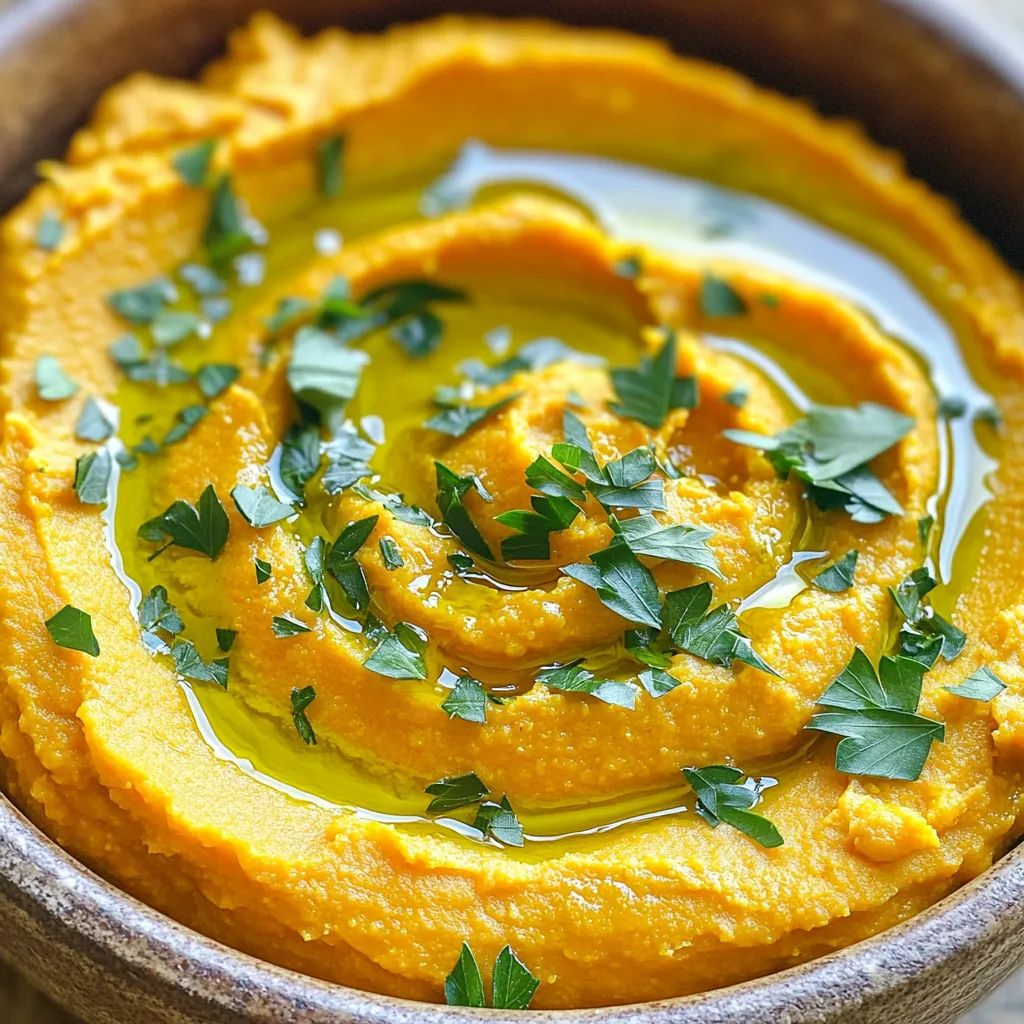
Are you ready to elevate your dip game? This Roasted Butternut Squash Hummus flavor-packed recipe combines the sweet, nutty taste of roasted squash with classic hummus ingredients. Not only is it simple to make, but it also fits various diets. Let’s jump into this delicious dive, where I’ll guide you through essential ingredients, easy steps, and tips for the perfect blend. You’ll impress your friends and family with this tasty twist!
Ingredients
List of Essential Ingredients
To make roasted butternut squash hummus, gather these key items:
– 1 medium butternut squash, peeled and cubed
– 1 can (15 oz) chickpeas, rinsed and drained
– 2 tablespoons tahini
– 2 tablespoons olive oil
– 2 tablespoons lemon juice
– 1 garlic clove, minced
– 1 teaspoon ground cumin
– ½ teaspoon smoked paprika
– Salt and pepper to taste
– 2-3 tablespoons water (as needed for consistency)
– Fresh parsley, chopped (for garnish)
These ingredients create a rich and creamy dip that bursts with flavor.
Optional Add-ins for Flavor
You can customize your hummus with extra flavors. Here are some great ideas:
– A pinch of cayenne for heat
– Roasted garlic for a sweet taste
– A splash of apple cider vinegar for tanginess
– Ground coriander for a citrusy note
– Chopped nuts for crunch
Feel free to mix and match these options to find your favorite blend!
Nutritional Information Breakdown
This hummus is not only tasty but also packed with nutrients. Here’s a quick look at the benefits:
– Butternut squash is high in vitamins A and C, great for your skin and immune system.
– Chickpeas provide protein and fiber, keeping you full.
– Tahini adds healthy fats and calcium.
This dip is a healthy option that satisfies your cravings while nourishing your body. Each serving is a delicious way to enjoy wholesome ingredients.
Step-by-Step Instructions
Preparation and Preheating
First, gather your ingredients. You need one medium butternut squash, canned chickpeas, tahini, olive oil, lemon juice, garlic, ground cumin, smoked paprika, salt, and pepper. Start by preheating your oven to 400°F (200°C). This temperature helps the squash roast perfectly.
Roasting the Butternut Squash
Next, peel and cube your butternut squash. The cubes should be about one inch. Toss these cubes with one tablespoon of olive oil, salt, and pepper. Spread them out evenly on a baking sheet. Make sure they are not crowded. Roast in the oven for 25 to 30 minutes. The squash should become tender and lightly browned. After roasting, take them out and let them cool slightly.
Blending the Ingredients for Hummus
Now it’s time to blend. In a food processor, combine the cooled butternut squash, rinsed chickpeas, tahini, remaining olive oil, lemon juice, minced garlic, ground cumin, smoked paprika, and a pinch of salt and pepper. Blend until smooth. If the hummus is too thick, add water, one tablespoon at a time, until you reach your desired texture. Taste the hummus and adjust the seasoning if needed. Finally, transfer it to a serving bowl. Drizzle a little olive oil on top and sprinkle with chopped parsley for a nice touch. Enjoy your tasty dip!
Tips & Tricks
How to Achieve the Perfect Consistency
To get the right texture for your hummus, start with the roasted butternut squash. After you roast it, let it cool a bit. When you blend it, add water in small amounts. This way, you control the creaminess. If your hummus is too thick, add one tablespoon of water at a time. Blend until smooth. If it’s too runny, add more chickpeas or squash.
Flavor Enhancements and Seasoning Options
You can boost the flavor of your hummus easily. Try adding a touch of lemon zest for brightness. A pinch of cayenne pepper gives a nice kick. You can also mix in fresh herbs like cilantro or basil. If you like it smoky, add more smoked paprika. Always taste and adjust the salt and pepper to your liking.
Recommended Garnishing Ideas
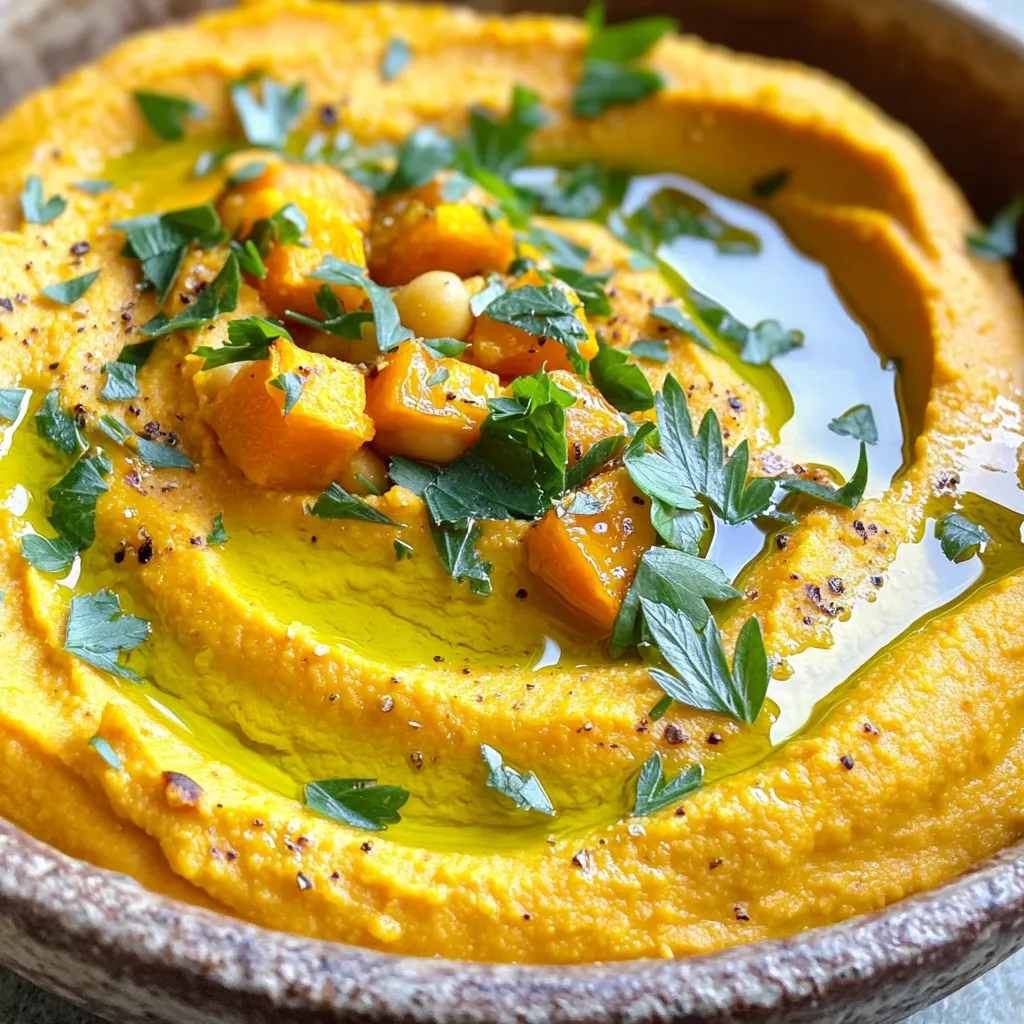
Garnishing makes your hummus more appealing. Drizzle some olive oil on top for shine. Add a sprinkle of paprika or cumin for color. Chopped fresh parsley adds freshness and a pop of green. For a fun twist, toss in some roasted pumpkin seeds or pine nuts for crunch.
Variations
Adding Herbs or Spices
You can make your roasted butternut squash hummus even better. Try adding fresh herbs like basil or cilantro. You can also use spices like coriander or cayenne for a kick. These flavors bring a fresh twist to the dip. Start with a small amount, then taste and adjust.
Alternative Roasted Vegetables
You can switch up the main ingredient too. Use roasted sweet potatoes or carrots instead of butternut squash. Both veggies provide a sweet flavor that pairs well with hummus. Make sure to roast them until tender, just like the squash. This keeps the dip creamy and delightful.
Vegan and Gluten-Free Adjustments
This recipe is already vegan and gluten-free. You can enjoy it without worry! If you need more protein, use extra chickpeas or add some hemp seeds. This keeps the hummus hearty and filling. Always check labels on tahini and olive oil to ensure they fit your diet.
Storage Info
Best Practices for Storing Hummus
To keep your roasted butternut squash hummus fresh, store it in an airtight container. This will help keep moisture in and prevent air from spoiling it. You can place a sheet of plastic wrap directly on the hummus before sealing it. This extra layer blocks air and keeps it tasty longer. Always let your hummus cool to room temperature before putting it in the fridge. It can stay fresh for up to one week in the fridge.
Freezing and Thawing Instructions
You can freeze roasted butternut squash hummus for later use. To do this, scoop it into a freezer-safe container. Leave some space at the top for expansion when it freezes. Seal it tightly with a lid. When you want to eat it, take it out of the freezer and place it in the fridge overnight to thaw. Once thawed, stir it well. If it seems thick, add a little water or olive oil to loosen it up.
Shelf Life and Signs of Spoilage
Roasted butternut squash hummus lasts about one week in the fridge. If you notice any changes, it may be time to toss it. Look for these signs of spoilage:
– Unpleasant smell
– Change in color
– Mold growth on the surface
If you see any of these signs, do not eat it. Always prioritize safety when enjoying your delicious hummus!
FAQs
Can I use frozen butternut squash?
Yes, you can use frozen butternut squash. Just remember to thaw it first. Drain any excess water before using it. This helps keep your hummus from getting too watery. Frozen squash may be softer than fresh, so adjust your blending time. Blend until smooth to get the best texture.
What to serve with Roasted Butternut Squash Hummus?
You can serve this hummus with many things. Fresh veggie sticks like carrots and celery work great. Pita bread or chips also pair well. You can even spread it on toast for a tasty snack. It makes a great dip for gatherings or a healthy addition to a meal.
How to make Roasted Butternut Squash Hummus thicker?
To make your hummus thicker, use less water when blending. You can also add more chickpeas or roasted squash. If it’s still thin, try adding some tahini or a bit of olive oil. Blend again until you reach the right consistency. Always taste and adjust to your liking.
To sum up, I shared key ingredients for Roasted Butternut Squash Hummus, plus optional add-ins. I provided detailed steps for preparation and roasting, then blending the mix. You learned tips for the perfect texture and flavor, along with variations to explore. I also covered storage best practices and common questions.
Experimenting with recipes is part of the fun. Enjoy making this tasty, healthy snack!