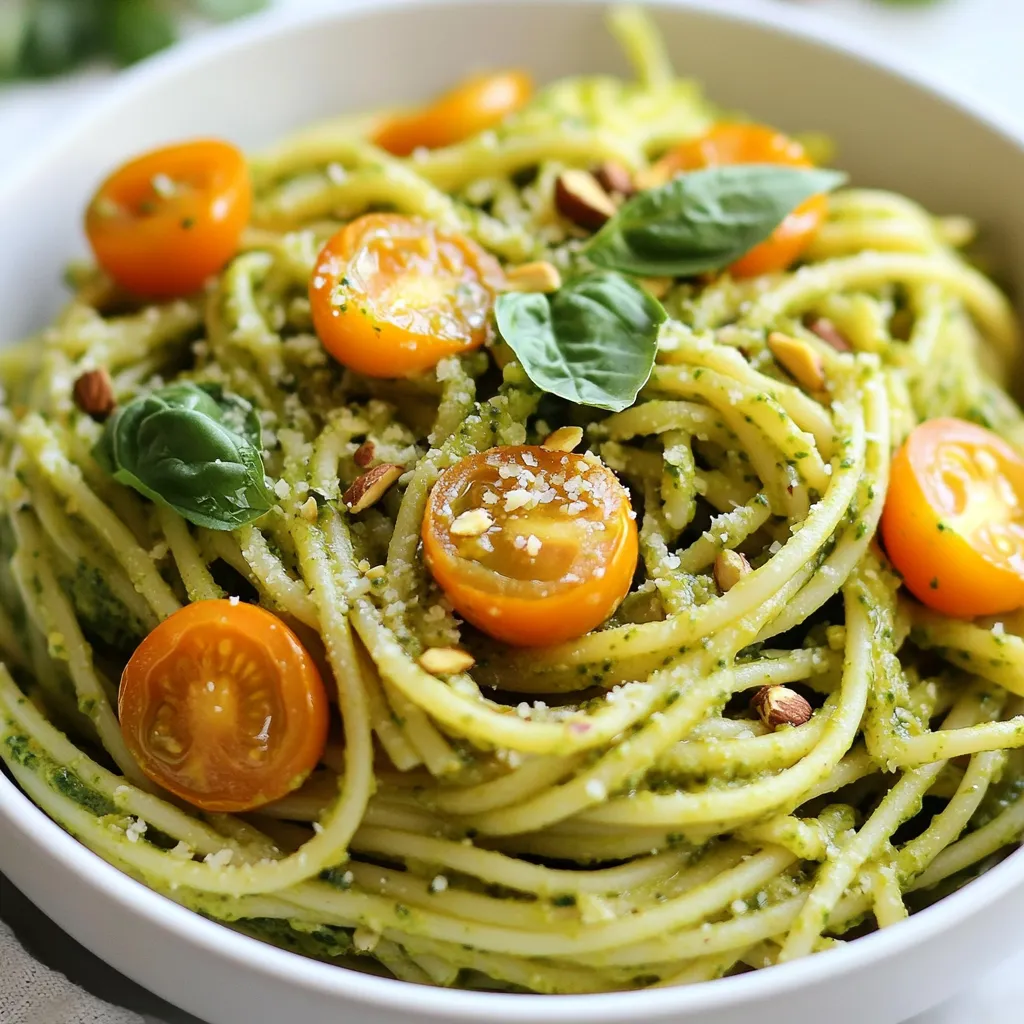
Looking for a fresh twist on pasta? Dive into this Pistachio Pesto Pasta recipe! With rich flavors and simple steps, you’ll impress your friends and family. I’ll guide you on making this delightful dish using fresh basil, crunchy pistachios, and creamy Parmesan. Whether you’re planning a quick weeknight meal or a special dinner, you can make it fun and tasty. Let’s get started on this easy culinary adventure!
Why I Love This Recipe
- Unique Flavor Profile: The combination of fresh basil and nutty pistachios creates a refreshing and rich pesto that elevates any pasta dish.
- Quick and Easy: This recipe comes together in just 30 minutes, making it a perfect option for a weeknight dinner or a last-minute gathering.
- Customizable: You can easily swap out the pasta type or add in seasonal vegetables, making it versatile for any palate or dietary need.
- Garnish for Greatness: The cherry tomatoes and extra pistachios add not only flavor but also a beautiful presentation that impresses guests.
Ingredients
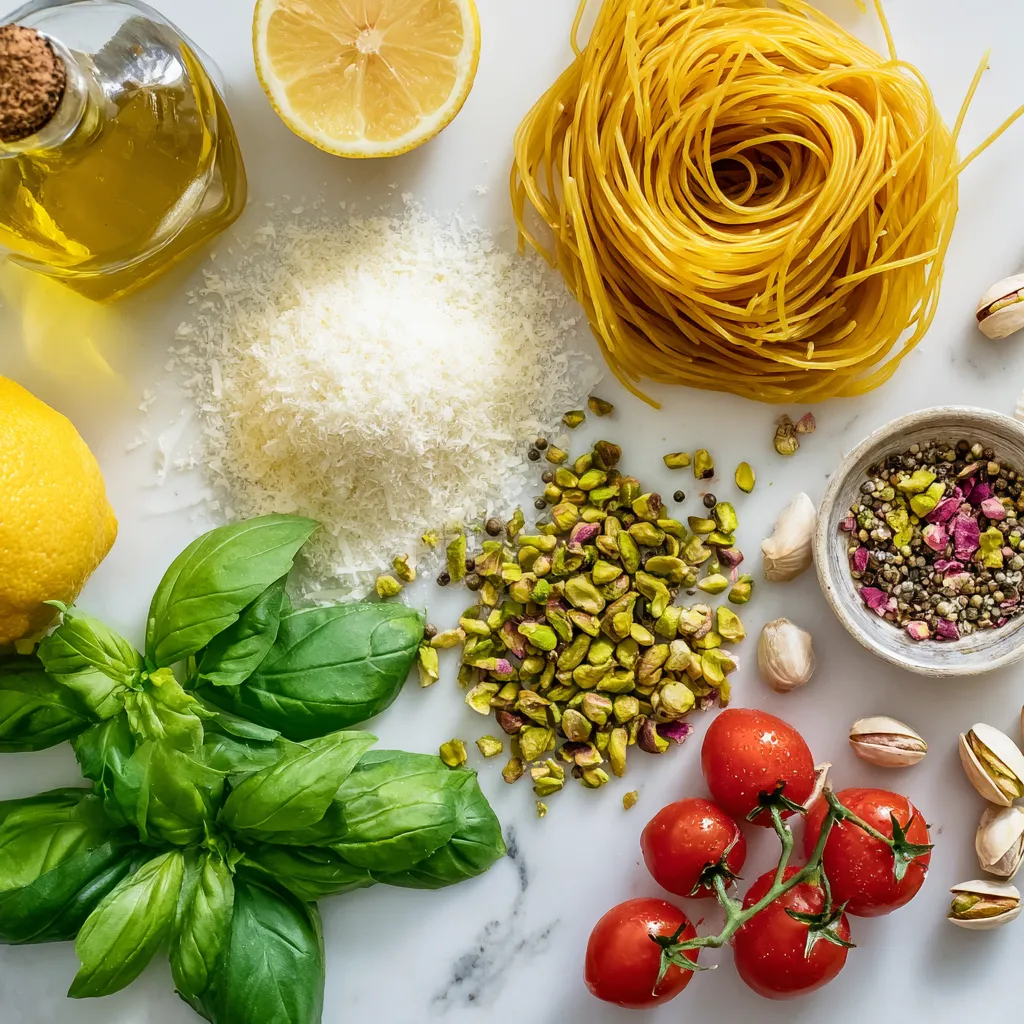
Fresh Basil Leaves
You need 2 cups of fresh basil leaves. These bright green leaves bring a sweet, herbal taste. Choose vibrant, unblemished leaves for the best flavor. Rinse them well and pat dry before use.
Shelled Pistachios
Next, grab 1 cup of shelled pistachios. These nuts add a creamy texture and a nutty taste. Make sure they are unsalted for the best results. You can use raw or lightly roasted ones.
Garlic and Parmesan Cheese
Use 4 cloves of peeled garlic for a bold flavor. Garlic adds a savory depth to the pesto. You also need 1/2 cup of grated Parmesan cheese. This cheese adds richness and a salty kick.
Olive Oil and Lemon Juice
For a smooth pesto, you’ll need 1/2 cup of extra virgin olive oil. This oil gives a fruity note and helps blend the ingredients. Squeeze the juice of 1 lemon, adding brightness to the mix.
Pasta Selection and Garnishes
Choose 400g of pasta you love, like spaghetti, fusilli, or penne. Each type holds the sauce differently. For garnishes, use halved cherry tomatoes and extra chopped pistachios. These add color and crunch to your dish.
Step-by-Step Instructions
Cooking the Pasta
First, grab a large pot and fill it with water. Add salt to the water. Bring it to a boil. Once it’s boiling, add 400 grams of your favorite pasta. Cook it according to the package instructions until it is al dente. This usually takes about 8 to 10 minutes. After cooking, save 1 cup of the pasta water. Then, drain the pasta and set it aside.
Preparing the Pesto Mixture
Now, let’s make the pesto. Take a food processor and add 2 cups of fresh basil leaves, 1 cup of shelled pistachios, 4 peeled garlic cloves, and 1/2 cup of grated Parmesan cheese. Pulse these ingredients until they are finely chopped. It should look like a green paste.
Combining Pasta with Pesto
With the food processor still running, slowly pour in 1/2 cup of extra virgin olive oil. Keep processing until the mixture is creamy. If it feels too thick, add a little of the reserved pasta water. This helps to achieve the right texture. Next, squeeze in the juice of 1 lemon. Add salt and pepper to taste, then pulse a few more times to mix.
Now, in a big mixing bowl, combine the cooked pasta and the pistachio pesto. Toss the pasta well to coat it evenly. If the sauce is too thick, add more reserved pasta water to loosen it.
Serving Suggestions and Presentation
For serving, plate the pasta in a large bowl. Top it with halved cherry tomatoes and extra chopped pistachios. This adds a nice crunch. For extra flair, sprinkle more Parmesan cheese and fresh basil leaves on top. A drizzle of olive oil completes the dish. Enjoy your beautiful pistachio pesto pasta!
Tips & Tricks
Achieving the Perfect Pesto Consistency
To get the best pesto, you want it to be smooth but not runny. Start by using fresh basil leaves. You can use a food processor to chop the basil, pistachios, garlic, and Parmesan cheese together. While mixing, slowly add olive oil. If it seems too thick, add a little reserved pasta water. This will help loosen it up. Just remember to stir until it is creamy and rich.
Enhancing Flavors with Seasoning
Seasoning is key for great taste. After mixing your pesto, squeeze in juice from one lemon. This adds brightness. Then, sprinkle in salt and pepper to your liking. Taste the pesto and adjust as needed. A little extra salt can bring out the flavors more. Don’t skip these steps; they make a big difference!
Best Practices for Cooking Pasta
When cooking pasta, always use a big pot of salted water. This helps the pasta taste better. Follow the package instructions to cook until it is al dente. That means it should be firm but not hard. Save about one cup of pasta water before draining. This water is perfect for adjusting your pesto sauce later. Toss the drained pasta with your pesto right away for the best flavor.
Pro Tips
- Use Fresh Ingredients: Always opt for fresh basil and high-quality extra virgin olive oil to enhance the flavor of your pesto.
- Adjust Consistency: Don’t hesitate to add more reserved pasta water gradually to the pesto if it feels too thick; this will help it coat the pasta better.
- Experiment with Nuts: While pistachios are delicious, try substituting or mixing in other nuts like walnuts or pine nuts for a different flavor profile.
- Make Ahead: Pesto can be made in advance and stored in the refrigerator for up to a week. Just cover it with a thin layer of olive oil to preserve freshness.
Variations
Gluten-Free Pasta Options
You can easily make this dish gluten-free. Just swap regular pasta for gluten-free pasta. Look for options made from rice or corn. They cook well and taste great with pesto. Always check the package for cooking times. This way, you will ensure your pasta is al dente. Gluten-free pasta pairs wonderfully with the creamy pistachio pesto.
Vegan Adaptations for Pesto
Want a vegan version? You can skip the Parmesan cheese. Try using nutritional yeast instead. It adds a cheesy flavor without any dairy. You can also add a bit of cashew cream for richness. This makes the pesto just as creamy and delicious. Use the same method to blend your ingredients. Your vegan pistachio pesto will still be fresh and tasty.
Adding Protein or Vegetables
Want to make your meal heartier? Add protein or veggies to your pasta. Grilled chicken or shrimp work well. If you prefer plant-based options, try chickpeas or lentils. For veggies, consider spinach, peas, or roasted bell peppers. You can stir them in while mixing the pasta and pesto. This adds color and nutrition to your dish. Enjoy creating your own version of pistachio pesto pasta!
Storage Info
Storing Leftover Pesto Pasta
To store leftover pesto pasta, put it in an airtight container. Make sure the lid is tight. This keeps the pasta fresh for up to three days in the fridge. If you notice the pesto getting dry, add a splash of olive oil to revive it.
Freezing Pesto for Future Use
You can freeze the pesto for later. Pour it in ice cube trays or small containers. This way, you can use just the amount you need. The pesto lasts in the freezer for up to three months. When you want to use it, let it thaw in the fridge overnight.
Reheating Tips for Best Texture
To reheat the pasta, place it in a pan over low heat. Add a bit of reserved pasta water or olive oil. Stir gently until warm. This keeps the sauce creamy and helps prevent sticking. You can also use the microwave. Heat it in short bursts, stirring in between. Enjoy your meal!
FAQs
What type of pasta is best for pistachio pesto?
I recommend using spaghetti, fusilli, or penne. These shapes hold the pesto well. Spaghetti provides a classic feel, while fusilli captures more sauce in its twists. Penne offers a bite-sized option. Choose the one you like best for this dish.
Can I use other nuts for the pesto?
Yes, you can! Almonds or walnuts work well. These nuts add unique flavors and textures. If you want a milder taste, try cashews. Each nut gives a different twist to your pesto. Experiment to find your favorite mix!
How to make a dairy-free version of this recipe?
To make this recipe dairy-free, skip the Parmesan cheese. Use nutritional yeast instead. It adds a cheesy flavor without dairy. You can also blend in some avocado for creaminess. This keeps the dish rich while being completely dairy-free.
This blog post covered how to make delicious pistachio pesto pasta. We explored key ingredients like fresh basil, garlic, and olive oil. I also shared step-by-step instructions for cooking pasta and mixing the pesto. You learned tips for great texture and taste, plus fun variations for dietary needs. Finally, we discussed storage options for leftovers. Enjoying this dish can be simple and fun, whether you stick with the classic recipe or try something new. So, get cooking and savor the flavors of your homemade pistachio pesto past