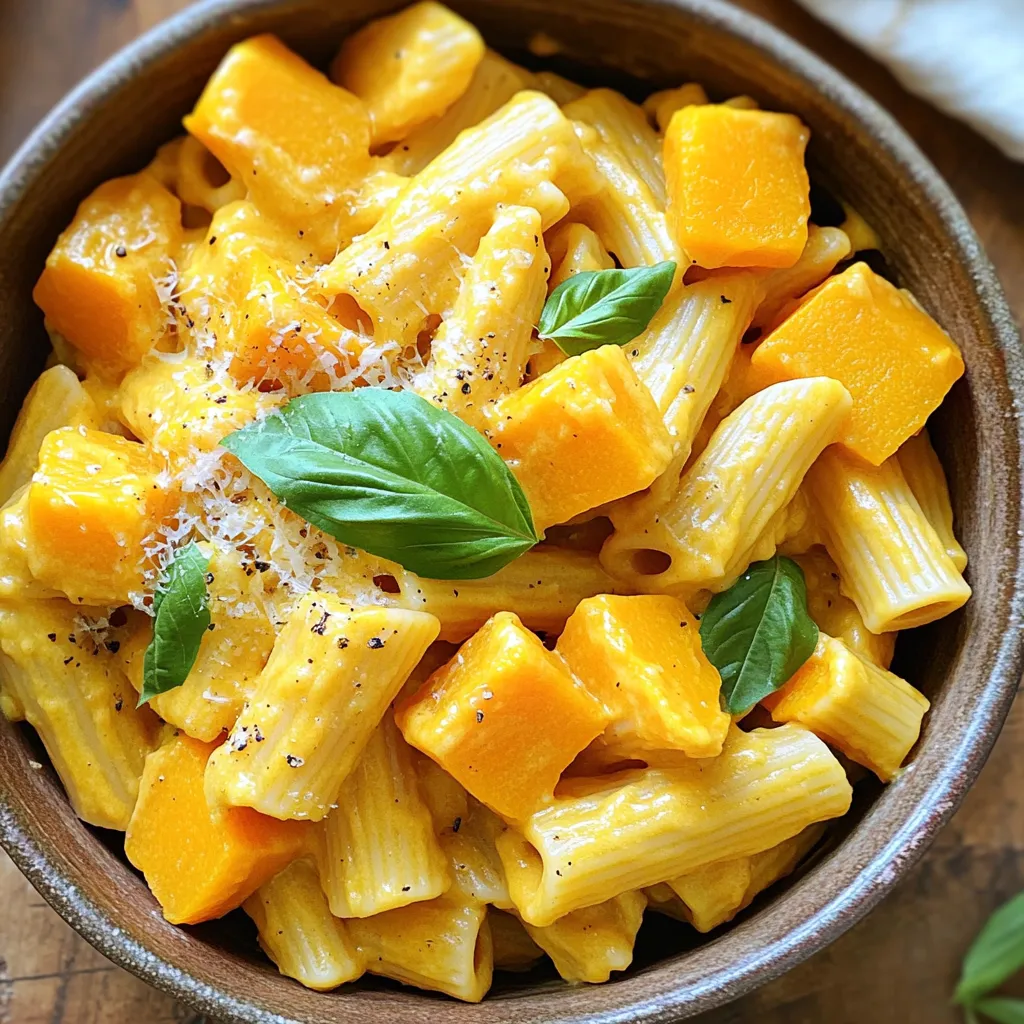
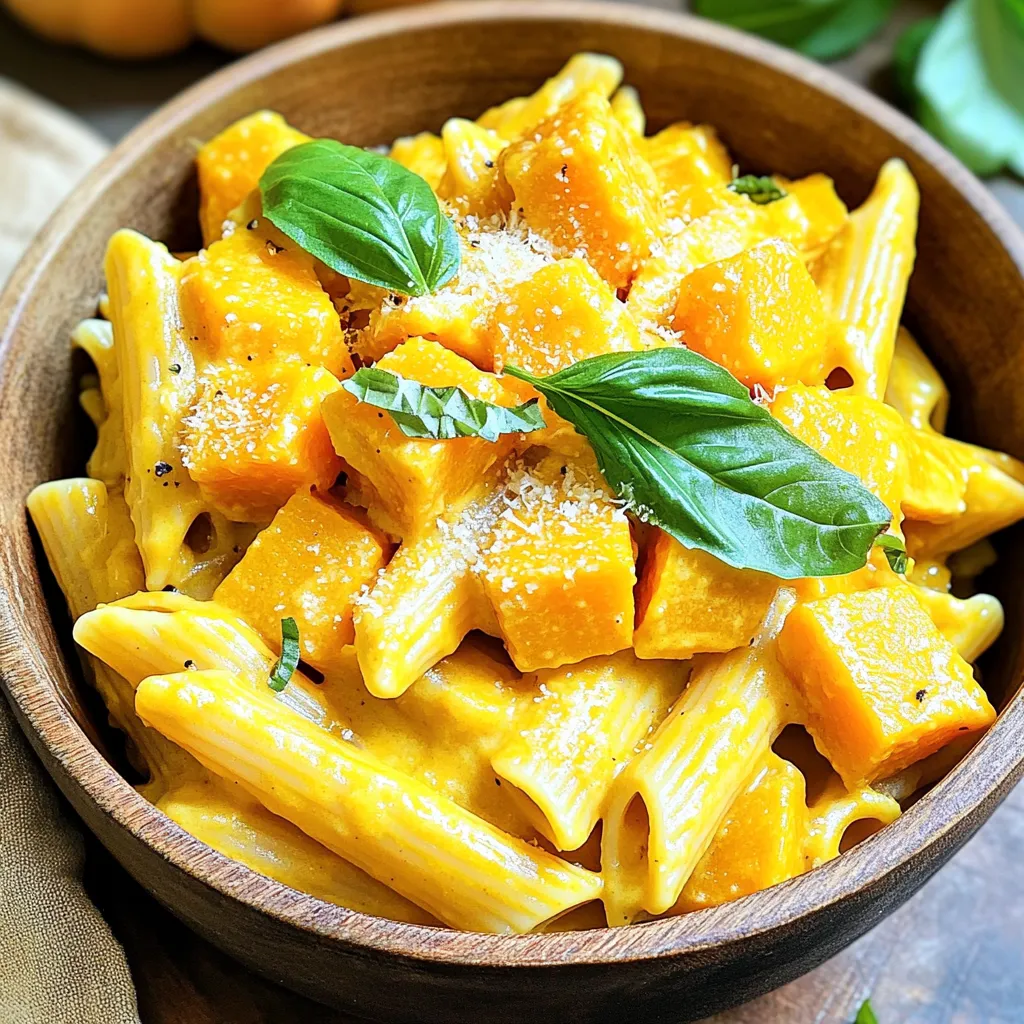
Ready to enjoy a warm bowl of One-Pot Creamy Butternut Squash Pasta Delight? This simple recipe is perfect for busy evenings and delivers rich flavors without the mess. I’ll guide you through easy steps to create a creamy, comforting meal using fresh ingredients. Whether you’re a pasta lover or just looking for a tasty new way to enjoy butternut squash, this dish will satisfy your cravings. Let’s dive in!
Ingredients
Detailed list of ingredients
– 2 cups butternut squash, peeled and diced
– 8 oz pasta (penne or fusilli work well)
– 1 tablespoon olive oil
– 1 small onion, finely chopped
– 3 cloves garlic, minced
– 2 cups vegetable broth
– 1 cup heavy cream or coconut milk
– 1 teaspoon dried thyme
– 1/2 teaspoon nutmeg
– Salt and pepper to taste
– 1/4 cup grated Parmesan cheese (optional for garnish)
– Fresh basil leaves for garnishing
Measurement conversions (if applicable)
– 8 oz pasta is about 2 cups dry pasta.
– 1 tablespoon of olive oil equals 15 milliliters.
– 1 cup is about 240 milliliters.
Optional ingredients for customization
– You can add spinach for extra greens.
– Try adding cooked chicken for protein.
– Swap heavy cream for a lighter option like yogurt.
– Use different herbs, like rosemary or sage, for varied flavor.
– Add crushed red pepper for a spicy kick.
Step-by-Step Instructions
Prep work before cooking
Start by gathering all your ingredients. You need:
– 2 cups butternut squash, peeled and diced
– 8 oz pasta (penne or fusilli)
– 1 tablespoon olive oil
– 1 small onion, finely chopped
– 3 cloves garlic, minced
– 2 cups vegetable broth
– 1 cup heavy cream or coconut milk
– 1 teaspoon dried thyme
– 1/2 teaspoon nutmeg
– Salt and pepper to taste
– 1/4 cup grated Parmesan cheese (optional for garnish)
– Fresh basil leaves for garnishing
Make sure your butternut squash is diced evenly. This helps it cook well. Chop the onion finely so it blends into the dish. Mince the garlic for that strong flavor. Set everything aside and get ready to cook.
Cooking the base in one pot
In a large pot, heat the olive oil over medium heat. Add the chopped onion and let it cook for about 3 to 5 minutes. You want it translucent, not browned. Next, stir in the minced garlic and the diced butternut squash. Cook this for another 5 minutes. Keep stirring so nothing sticks.
Now, pour in the vegetable broth. Bring it to a boil. Once boiling, add the pasta, dried thyme, and nutmeg. Season with salt and pepper to taste. Lower the heat and cover the pot. Let it simmer for about 12 to 15 minutes. Stir occasionally to keep the pasta from sticking. The squash should be tender, and the pasta cooked through.
Final steps for creaminess and flavor
Once your pasta is cooked, it’s time to add the cream or coconut milk. Stir this in and let it simmer for another 3 to 4 minutes. This will thicken the sauce and make it creamy. Taste your dish and adjust the salt and pepper if needed. If you like, sprinkle some grated Parmesan cheese on top.
Remove the pot from heat and let it sit for a couple of minutes. This helps the flavors blend. Now, serve your creamy butternut squash pasta in bowls. Garnish with fresh basil leaves and a drizzle of olive oil for that final touch. Enjoy your delicious, comforting meal!
Tips & Tricks
How to choose the best butternut squash
When picking butternut squash, look for firm ones. The skin should be smooth and tan. Avoid any with soft spots or blemishes. A good squash feels heavy for its size. This means it has more flesh inside. Choose squash that is about 2 to 3 pounds. This size cooks well and gives great flavor.
Cream vs. coconut milk: Which to use?
Both cream and coconut milk work well in this dish. Cream adds a rich, smooth taste. It makes the sauce thick and creamy. Coconut milk, on the other hand, is lighter and dairy-free. It gives a hint of sweetness and a tropical twist. Choose based on your taste or dietary needs. If you want a vegan meal, go for coconut milk.
Cooking tips for perfect pasta texture
To get perfect pasta, follow these tips. First, use plenty of water when cooking. This helps the pasta cook evenly. Stir the pasta often to avoid sticking. Cook until it’s al dente, which means firm but not hard. After adding the cream or coconut milk, let it simmer gently. This lets the flavors blend and the sauce thicken. Taste your pasta before serving. Adjust the salt and pepper as needed for the best flavor.
Variations
Vegetarian and vegan adaptations
You can easily make this dish vegetarian or vegan. To do this, replace the heavy cream with coconut milk or a cashew cream. Both options keep the dish rich and creamy. Use nutritional yeast instead of Parmesan for a cheesy flavor without dairy. You can also add extra herbs like parsley or chives for more freshness. These swaps let you enjoy the same delicious taste while meeting your dietary needs.
Adding proteins like chicken or beans
If you want more protein in your meal, try adding chicken or beans. For chicken, dice it and sauté it with the onions and garlic. Cook until the chicken is browned and fully cooked. If you prefer beans, add canned beans like chickpeas or white beans. Stir them in when you add the cream or coconut milk. Both options increase protein and make the dish more filling.
Incorporating additional vegetables or spices
Feel free to mix in other veggies for more color and nutrition. Spinach or kale works well; add them in the last few minutes of cooking. For a spicy kick, consider adding red pepper flakes or a pinch of cayenne. You can also try different spices like smoked paprika or cumin for a unique twist. These simple changes create a dish that suits your taste and preferences.
Storage Info
Best practices for refrigerating leftovers
Store your creamy butternut squash pasta in an airtight container. Let it cool to room temperature first. This helps keep the flavor fresh. Place the container in the fridge. It will last for about three to four days. When you are ready to eat, make sure to check for any signs of spoilage.
Freezing instructions and tips
You can freeze this pasta dish, but it may change in texture. Use a freezer-safe container to store it. Label the container with the date. It can stay in the freezer for up to three months. When ready to use, thaw it overnight in the fridge. This helps preserve its taste.
Reheating methods for optimal taste
Reheat your pasta on the stove for the best flavor. Add a splash of vegetable broth or cream. This keeps it creamy and prevents drying out. Stir often until heated through. You can also use the microwave. Just heat in short bursts and stir in between. Enjoy your delicious meal!
FAQs
Can I use frozen butternut squash?
Yes, you can use frozen butternut squash. Just make sure to thaw it first. Frozen squash is often pre-cut and ready to use. This can save you time. When using frozen squash, adjust the cooking time. It may cook faster than fresh. Add it to the pot with the garlic. This helps it blend well with the other flavors.
What type of pasta works best?
Penne and fusilli are great choices for this dish. These shapes hold sauce well and add texture. You can also try farfalle or rotini for fun shapes. Choose your favorite pasta to make it your own. Cook the pasta until it’s al dente for the best bite. This means it should be firm yet tender.
How do I make this dish gluten-free?
To make this dish gluten-free, use gluten-free pasta. There are many options available today. Look for pasta made from rice, quinoa, or chickpeas. These alternatives work well in creamy dishes. Cook it according to the package instructions. This ensures the pasta is perfect in texture. You can also check the vegetable broth for gluten-free labeling.
This blog post covered everything you need for a delicious butternut squash pasta dish. We explored the essential ingredients, handy measurements, and optional add-ins for your taste. I shared clear steps for cooking and tips for perfect texture. We also discussed variations for vegetarians and how to store leftovers.
In closing, this recipe is flexible and fun. You can customize it to fit your needs and preferences. Enjoy making it your own!