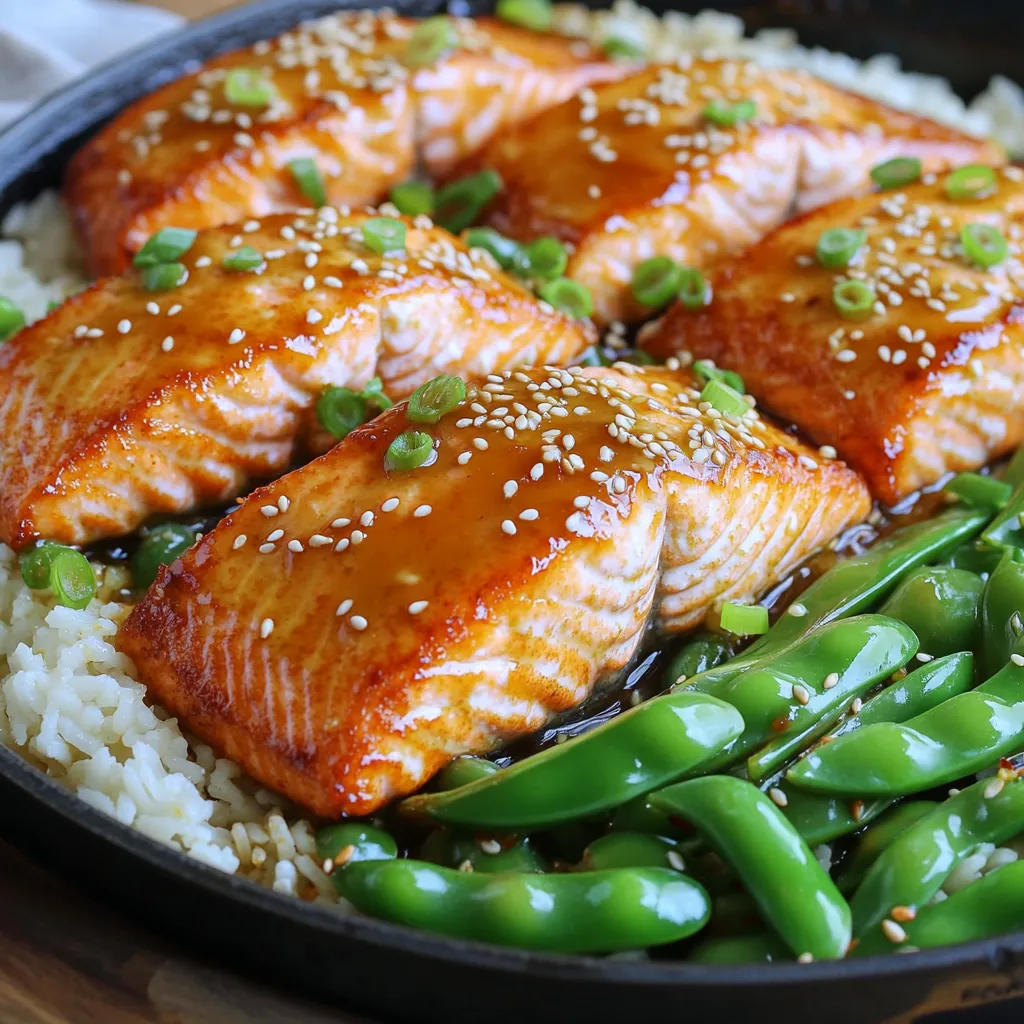
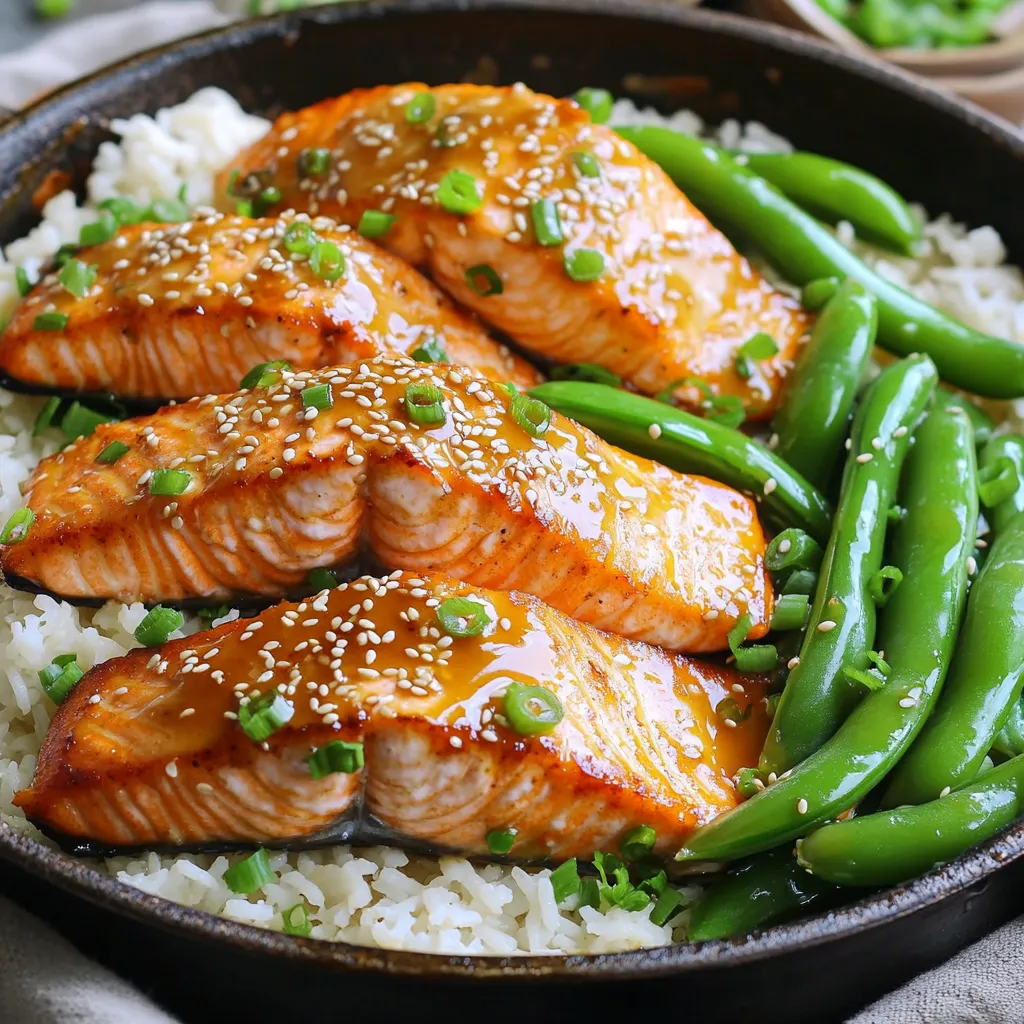
If you’re in a rush but crave something delicious, my Minute Sesame Ginger Salmon Skillet is for you. This quick and easy dish bursts with flavor and takes just minutes to prepare. With simple ingredients and straightforward steps, you’ll impress your taste buds without spending hours in the kitchen. Let’s dive into the details so you can whip up this tasty meal tonight!
Ingredients
List of Ingredients
– 4 salmon fillets (about 6 oz each)
– 2 tablespoons sesame oil
– 2 tablespoons fresh ginger, grated
– 3 garlic cloves, minced
– 1/4 cup soy sauce (low sodium preferred)
– 2 tablespoons honey
– 1 tablespoon rice vinegar
– 1 tablespoon sesame seeds
– 1 green onion, finely sliced
– 1 cup sugar snap peas
– Salt and pepper to taste
– Cooked rice or quinoa, for serving
Ingredient Substitutions
You can swap salmon for any firm fish like trout or cod. If you want a vegetarian option, try tofu. Use olive oil instead of sesame oil for a different flavor. If you don’t have fresh ginger, ground ginger works too, but use less. For soy sauce, tamari is a great gluten-free choice. Honey can be replaced with maple syrup for a vegan option.
Measurement Tips
When measuring sticky ingredients like honey, use a liquid measuring cup. Spray it lightly with oil first. For ginger, a microplane grater works best for fine grating. Use a scale for the salmon to ensure equal portions. When measuring soy sauce, pour it slowly to avoid spills. Always taste your sauce as you make it to get the flavor just right.
Step-by-Step Instructions
Prepping the Salmon
To start, gather your salmon fillets. You need four fillets, each about six ounces. Rinse them under cold water and pat them dry with a paper towel. This step helps the skin crisp up nicely. Next, season each fillet with salt and pepper. Be generous, as this will enhance the flavor.
Cooking the Salmon
Now, grab a large skillet and heat two tablespoons of sesame oil over medium-high heat. The oil should shimmer when it’s ready. Place the salmon in the skillet skin-side down. Cook for three to four minutes until the skin is crispy. You will see the color change halfway up the side of the fillet. This shows it is cooking well.
Making the Sauce and Serving
While the salmon cooks, make the sauce. In a small bowl, whisk together two tablespoons of fresh ginger, three minced garlic cloves, one-fourth cup of low-sodium soy sauce, two tablespoons of honey, and one tablespoon of rice vinegar. Mix until smooth.
After four minutes, pour the sauce over the salmon. Add one cup of sugar snap peas to the skillet too. Cook for another three to four minutes. Spoon the sauce over the salmon as it cooks. The salmon will finish cooking, and the snap peas will stay crisp.
Before serving, sprinkle one tablespoon of sesame seeds and sliced green onion on top. This adds flavor and a nice crunch. Serve the dish over cooked rice or quinoa, drizzling extra sauce from the skillet on top. Enjoy your meal!
Tips & Tricks
How to Achieve Perfectly Crispy Skin
To get crispy skin on your salmon, start with dry fillets. Pat them with paper towels before cooking. Next, heat the sesame oil until it shimmers. This means it’s hot enough. Place the salmon skin-side down in the skillet. Cook it for about 3 to 4 minutes. Don’t move it too much. Let it sear nicely. The skin will turn golden and crispy.
Enhancing Flavor with Seasonings
The secret to great flavor lies in your seasonings. Use fresh ginger and garlic. They add a nice punch. Whisk them with soy sauce, honey, and rice vinegar. This mix makes a tasty sauce. Pour it over the salmon while it cooks. The sauce will soak into the fish and snap peas. You can also sprinkle extra sesame seeds on top. They add a lovely crunch and nutty taste.
Cooking Temperature and Time Adjustment
Cooking salmon at medium-high heat works well. It cooks quickly and evenly. If your fillets are thicker, you may need more time. Keep an eye on them. If they start to brown too fast, lower the heat slightly. The salmon is done when it flakes easily with a fork. Aim for about 6 to 8 minutes of total cooking time.
Variations
Alternative Proteins
You can swap salmon for other fish. Tuna and cod work well. Chicken breast is another great choice. Just adjust cooking time for thicker cuts. For a plant-based option, try firm tofu. It soaks up the sauce nicely and adds protein.
Vegetable Additions
Feel free to add more veggies to the skillet. Bell peppers, broccoli, or carrots brighten the dish. You can mix in leafy greens like spinach or kale. Just add them to the skillet a minute before the dish is done. This keeps them fresh and adds color.
Flavor Profile Modifications
There are many ways to tweak the flavor. Add a splash of lime juice for zest. You can use sriracha for heat. Try swapping honey for maple syrup for a different sweetness. Each change brings a new spin to this dish.
Storage Info
How to Store Leftovers
To store leftovers, let the salmon cool first. Use an airtight container. Place the salmon and peas in the container. Make sure to keep the sauce separate. This helps keep the salmon fresh. You can store leftovers in the fridge for up to 3 days.
Reheating Instructions
To reheat, place the salmon in a skillet. Add a splash of water or sauce. Heat on low over medium heat. This keeps the salmon moist and tasty. You can also use a microwave. Heat on medium power for 1-2 minutes. Check to avoid overcooking.
Freezing Options
You can freeze cooked salmon if you need to. Place it in a freezer-safe bag. Remove as much air as possible. Seal it tightly. You can freeze it for up to 3 months. When ready, thaw in the fridge overnight. Reheat as needed for a quick meal.
FAQs
Can I use frozen salmon for this recipe?
Yes, you can use frozen salmon. Just make sure to thaw it first. Thaw the salmon overnight in the fridge or under cold water. After thawing, pat it dry to remove excess moisture. This helps the skin crisp up nicely when you cook it.
What can I serve with sesame ginger salmon?
You can serve this dish with a variety of sides. Here are some great options:
– Cooked rice or quinoa
– Steamed broccoli or asparagus
– A fresh green salad
– Roasted sweet potatoes
These sides add color and flavor to your meal. They also balance the rich taste of the salmon.
How can I make this recipe gluten-free?
To make this recipe gluten-free, use gluten-free soy sauce. Many brands offer a good taste without gluten. You can also swap rice vinegar with apple cider vinegar, which is naturally gluten-free. Just check labels to be sure everything you use is gluten-free.
This blog post covered the key steps to cook sesame ginger salmon. I shared ingredient lists, substitutions, and measurement tips to help you. You learned how to prep, cook, and serve the dish. I provided tips for crispy skin and enhancing flavors too. Plus, I offered variations on proteins and vegetables to mix things up.
Storing leftovers and reheating methods were also discussed. Now, you’re ready to try this delicious recipe, adjust it to your taste, and enjoy every bite. Happy cooking!